
Concord Materials
A construction supply coordination platform.
Timeline
Timeline
9 months
9 months
Services
Services
product design
product design
Team
Team
5 people
5 people
year
year
2022
2022
Task
Task
a simpler way to manage material orders
a simpler way to manage material orders
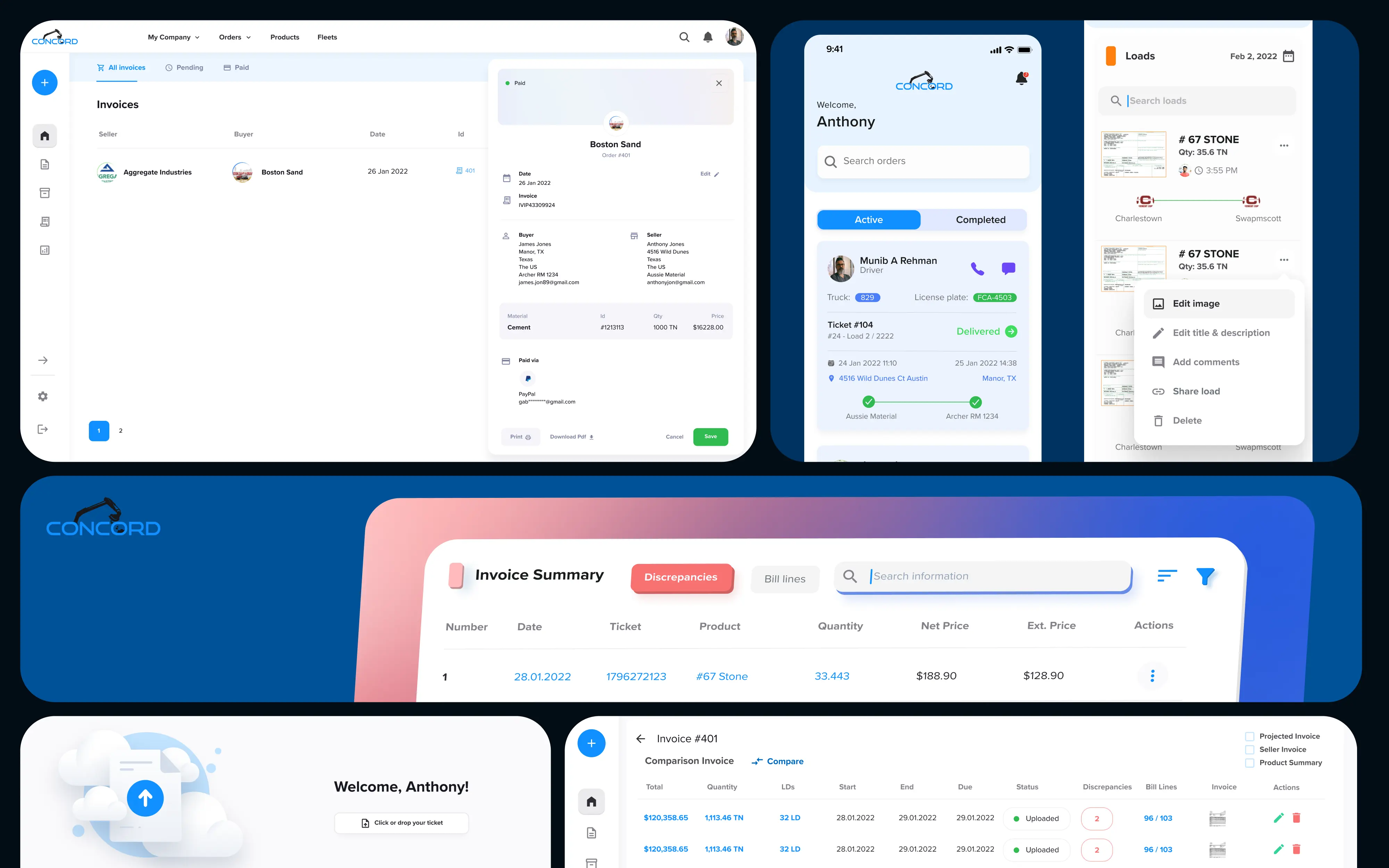
I was asked to redesign how Concord handled material requests from field to office. The goal was to reduce back-and-forth and make sure nothing got lost between a foreman’s call and an invoice.
I was asked to redesign how Concord handled material requests from field to office. The goal was to reduce back-and-forth and make sure nothing got lost between a foreman’s call and an invoice.
Challenge
Challenge
Everyone wanted visibility.
but in different ways
Everyone wanted visibility.
but in different ways
The driver just needed to know where to go. Finance wanted quantity breakdowns, timestamps, and matched values. The hard part wasn’t the data, it was making it usable for everyone.
The driver just needed to know where to go. Finance wanted quantity breakdowns, timestamps, and matched values. The hard part wasn’t the data, it was making it usable for everyone.
Solutions
Solutions
We matched field logs with invoice lines — automatically
We matched field logs with invoice lines — automatically
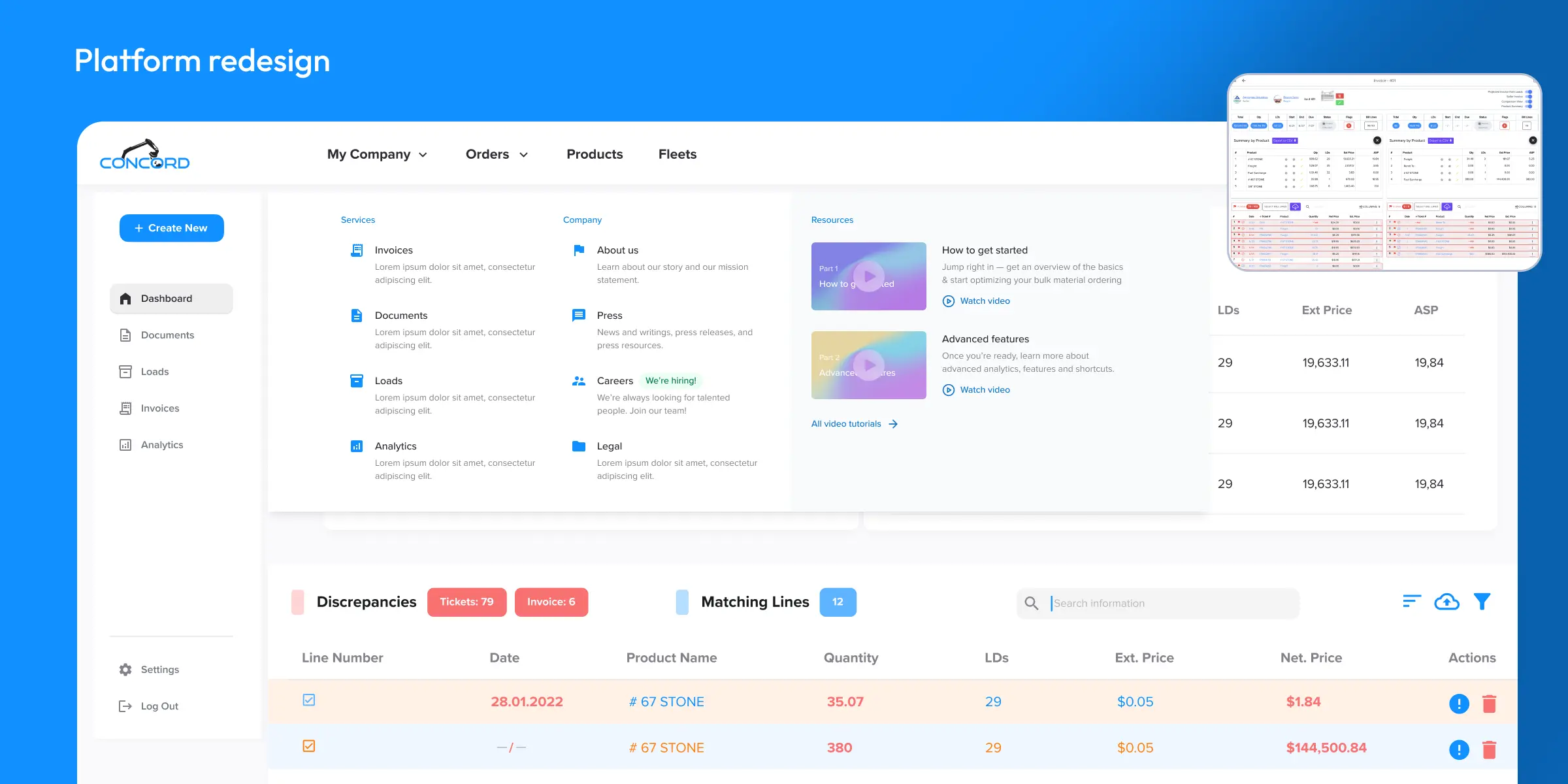
Every delivery got tied to a job, quantity, and supplier. That meant accounting could validate everything with one view, with discrepancies flagged before money moved.
Every delivery got tied to a job, quantity, and supplier. That meant accounting could validate everything with one view, with discrepancies flagged before money moved.
About the Project
About the Project
Scaling a Load Platform Without Scaling the Mess
Scaling a Load Platform Without Scaling the Mess
Concord moves thousands of materials orders a week across contractors, sellers, and admins. I joined to rethink the load management experience — from dispatch to payment — so it could scale with demand. I mapped the end-to-end system using service blueprints, aligned use cases through the JTBD method, and audited the platform with heuristic evaluation. Then, I ran tree tests to validate a revised IA and tackled redesigns for quoting, tracking, and invoicing. Alongside the platform, I built a shared UI kit to reduce inconsistency and speed up design-dev handoff. Every change was measured against how much time and effort it saved on the ground.
Concord moves thousands of materials orders a week across contractors, sellers, and admins. I joined to rethink the load management experience — from dispatch to payment — so it could scale with demand. I mapped the end-to-end system using service blueprints, aligned use cases through the JTBD method, and audited the platform with heuristic evaluation. Then, I ran tree tests to validate a revised IA and tackled redesigns for quoting, tracking, and invoicing. Alongside the platform, I built a shared UI kit to reduce inconsistency and speed up design-dev handoff. Every change was measured against how much time and effort it saved on the ground.
Heuristic evaluation
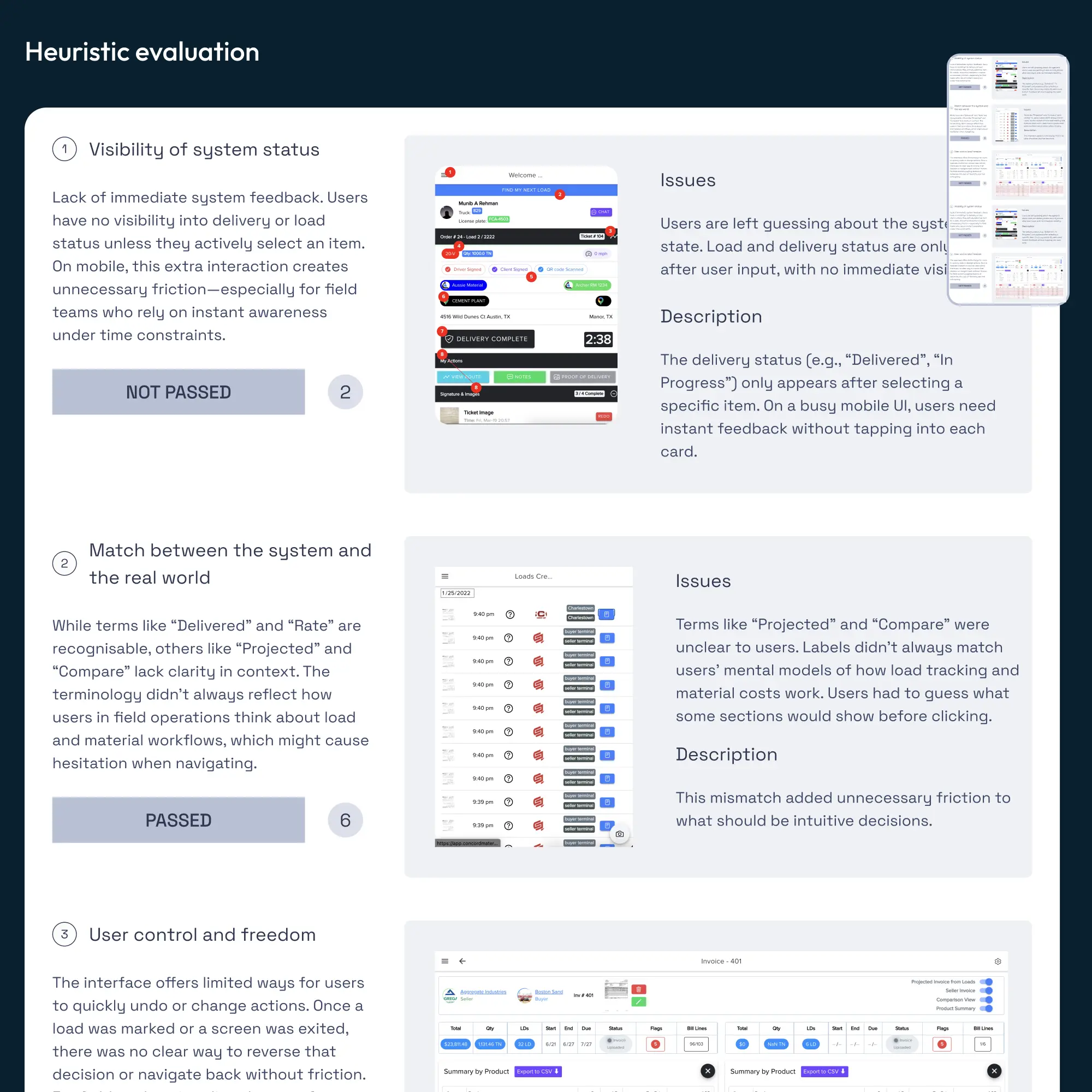
DISCOVERY: I conducted a heuristic evaluation based on Nielsen’s 10 principles to identify usability gaps across the platform. RESULTS: I used these insights to rework flows, fix visibility gaps, and ensure the system behaves as users expect — especially under time constraints.
Information architecture
DISCOVERY: The app’s hierarchy lumped unrelated features together, which blurred task boundaries for each team. RESULTS: I created a role-sensitive IA that gave each user group a clearer, more intuitive starting point.
User flows
DISCOVERY: Mapping out Concord’s end-to-end user flows uncovered disconnects — users didn’t always know whether a load was successfully added, assigned, or updated. RESULTS: I restructured key flows around user intent — to reduce friction in onboarding and streamline seller assignment
User Interviews
DISCOVERY: Conducted user interviews to understand how construction managers source, track, and evaluate material performance in real projects. RESULTS: Revealed workflow bottlenecks that informed a simplified interface for managing material data and supplier communication.
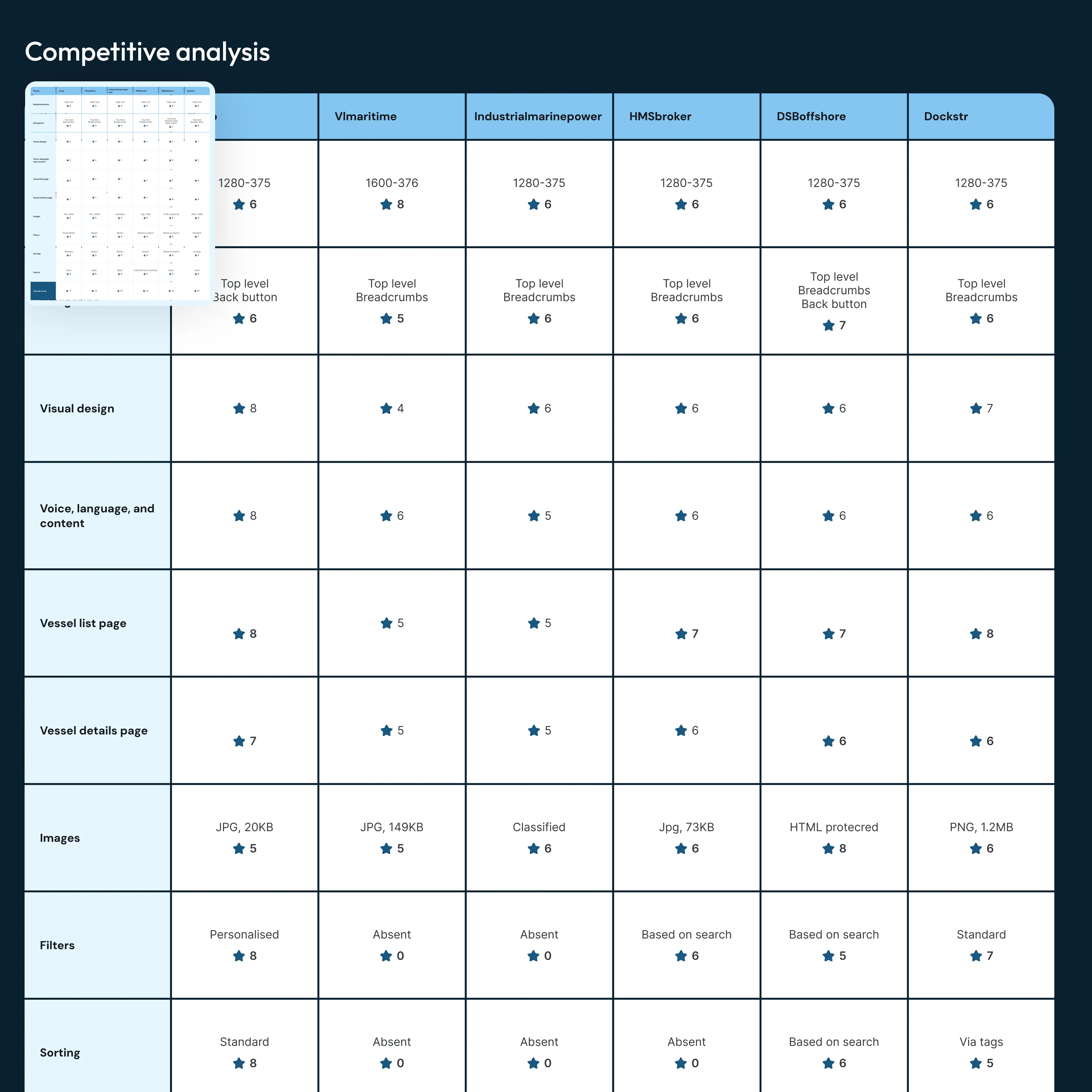
Competitive Analysis
Information architecture
customer journey maps
Usability benchmarking
Implementation
Implementation
Restructuring what people actually used
Restructuring what people actually used
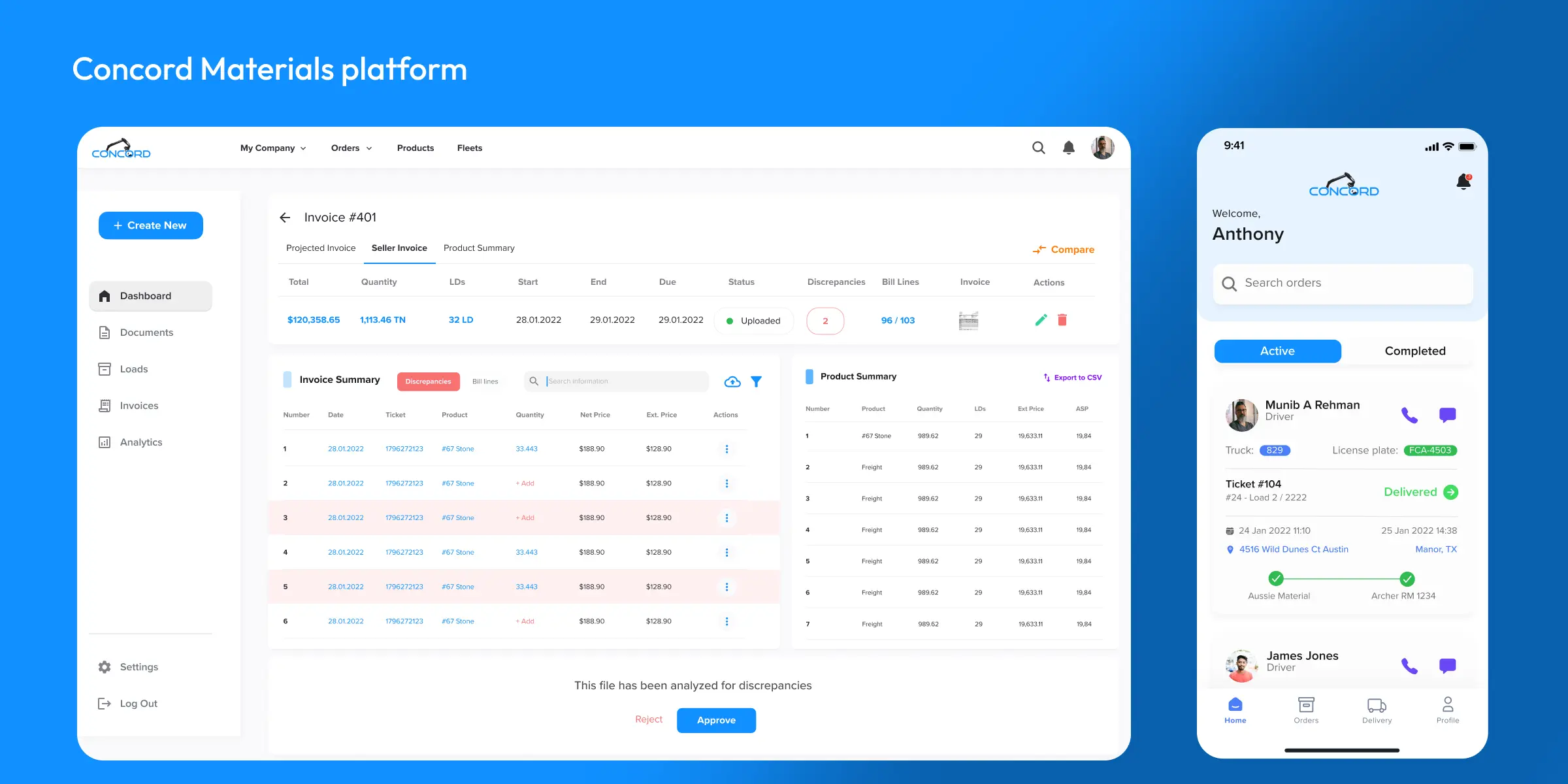
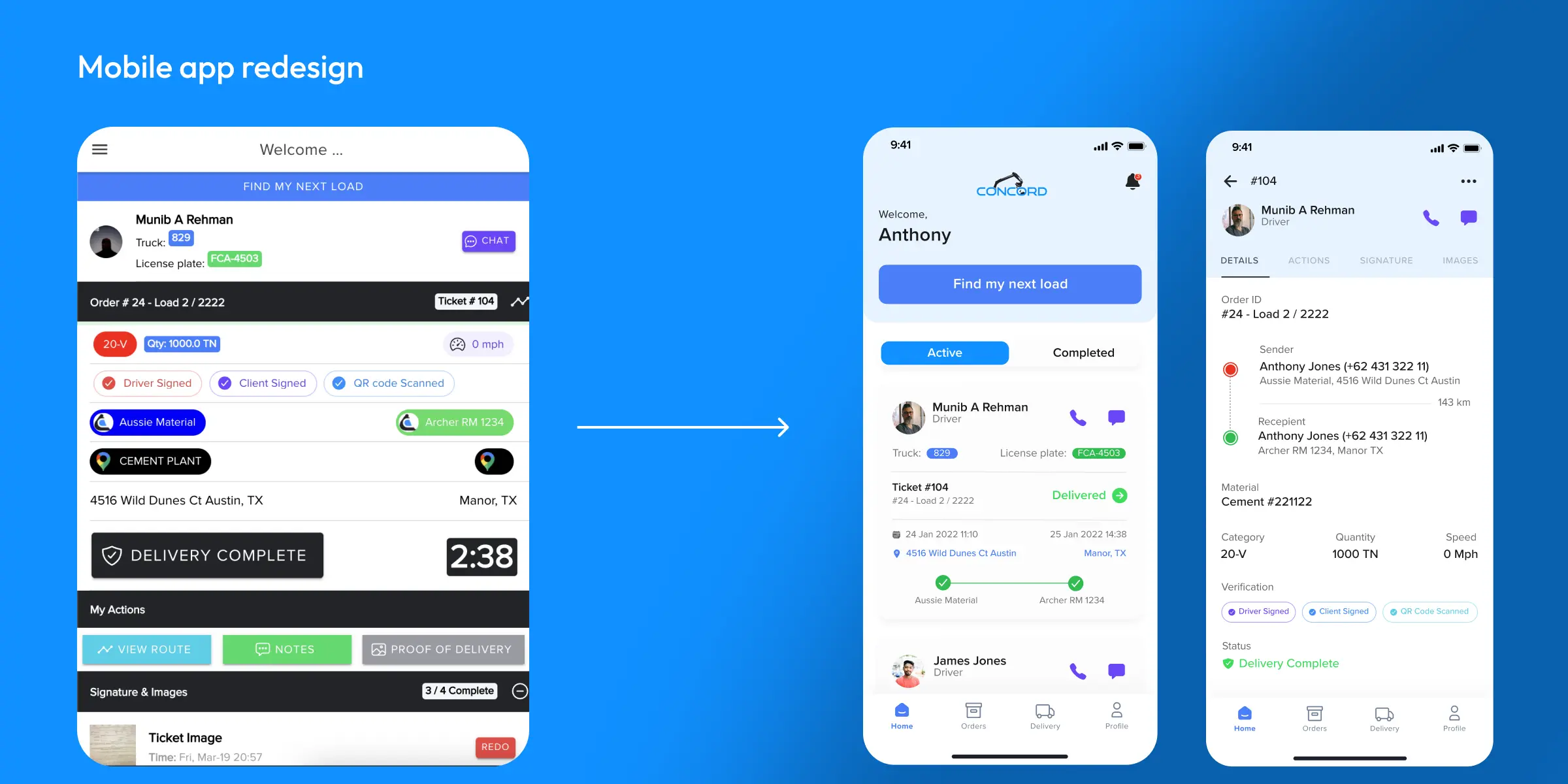
I focused on redesigning the flows teams touched most — onboarding, quoting, tracking, and invoicing. I cleaned up navigation, clarified language, and simplified layouts so field teams didn’t have to second-guess the interface.
I focused on redesigning the flows teams touched most — onboarding, quoting, tracking, and invoicing. I cleaned up navigation, clarified language, and simplified layouts so field teams didn’t have to second-guess the interface.
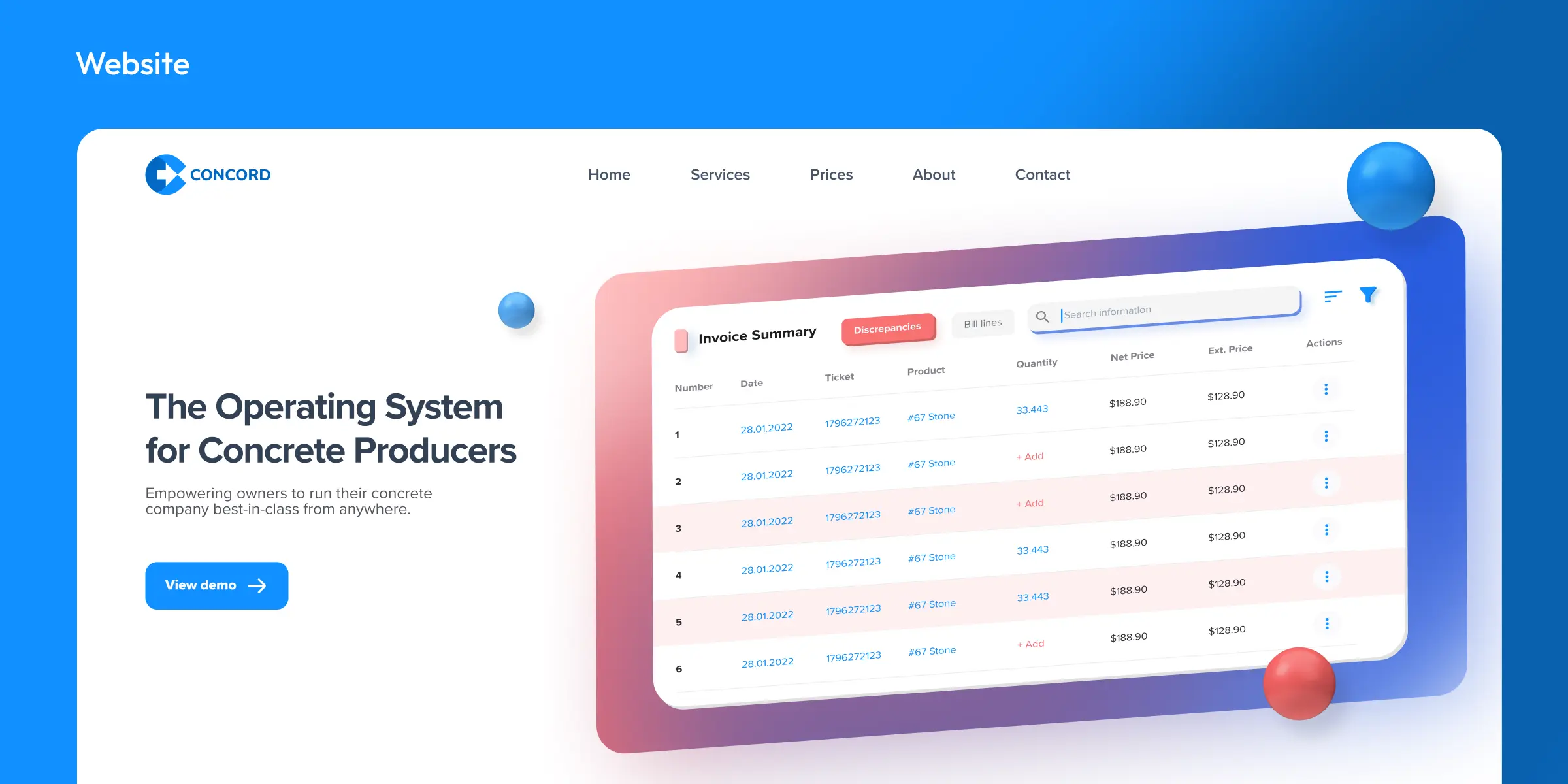
Final Designs
Conclusion
Conclusion
Focused Iteration on Core Workflows
Focused Iteration on Core Workflows
I focused on clarity and control across the core tasks: tracking, delivery, invoicing. Each decision aimed to make the system feel more like a tool and less like a puzzle. No shortcuts, just smaller steps in the right direction.
I focused on clarity and control across the core tasks: tracking, delivery, invoicing. Each decision aimed to make the system feel more like a tool and less like a puzzle. No shortcuts, just smaller steps in the right direction.

About
Contact
© 2014-2025. Designed by zdoor ruslan.
About
Contact
© 2014-2025. Designed by zdoor ruslan.
About
Contact
© 2014-2025. Designed by zdoor ruslan.