End-to-end product design for a finance dashboard serving AI SaaS companies at $1M–$5M ARR, covering P&L, benchmarking, unit economics, and retention in one unified system.
Services
product design
Branding
Team
9 People
Table of contents
(02)
—
(03)
—
(04)
—
(05)
—
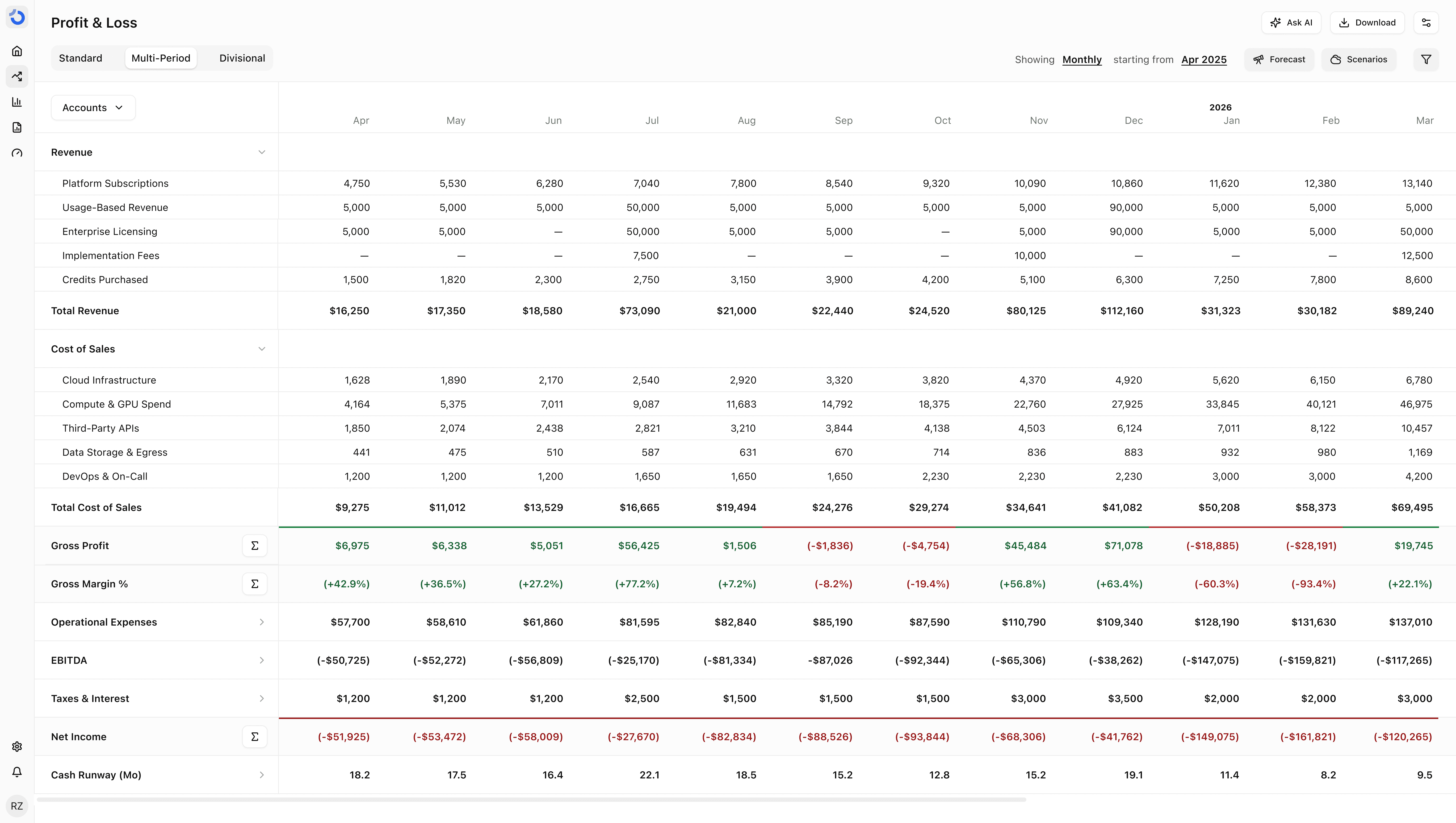
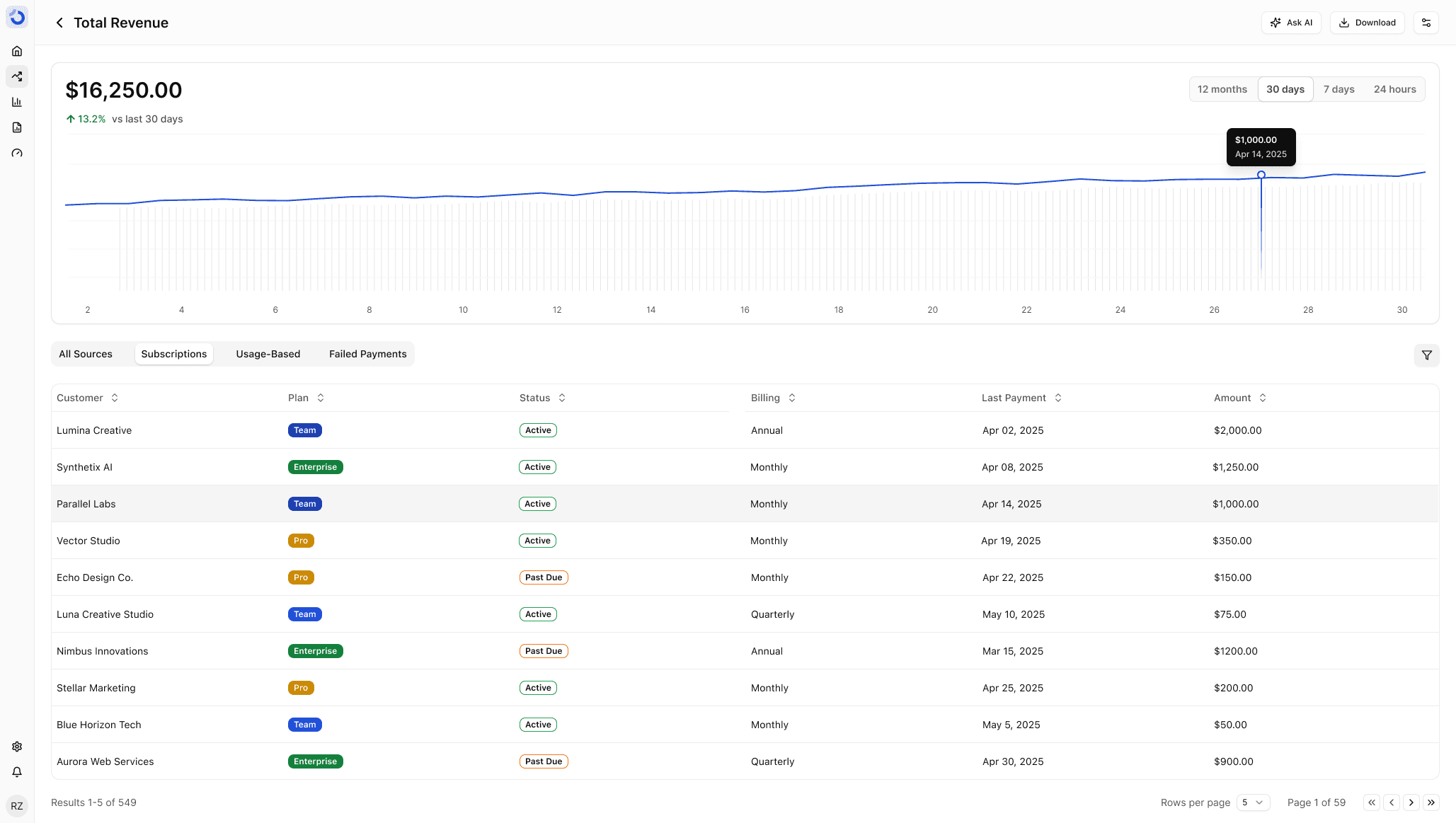
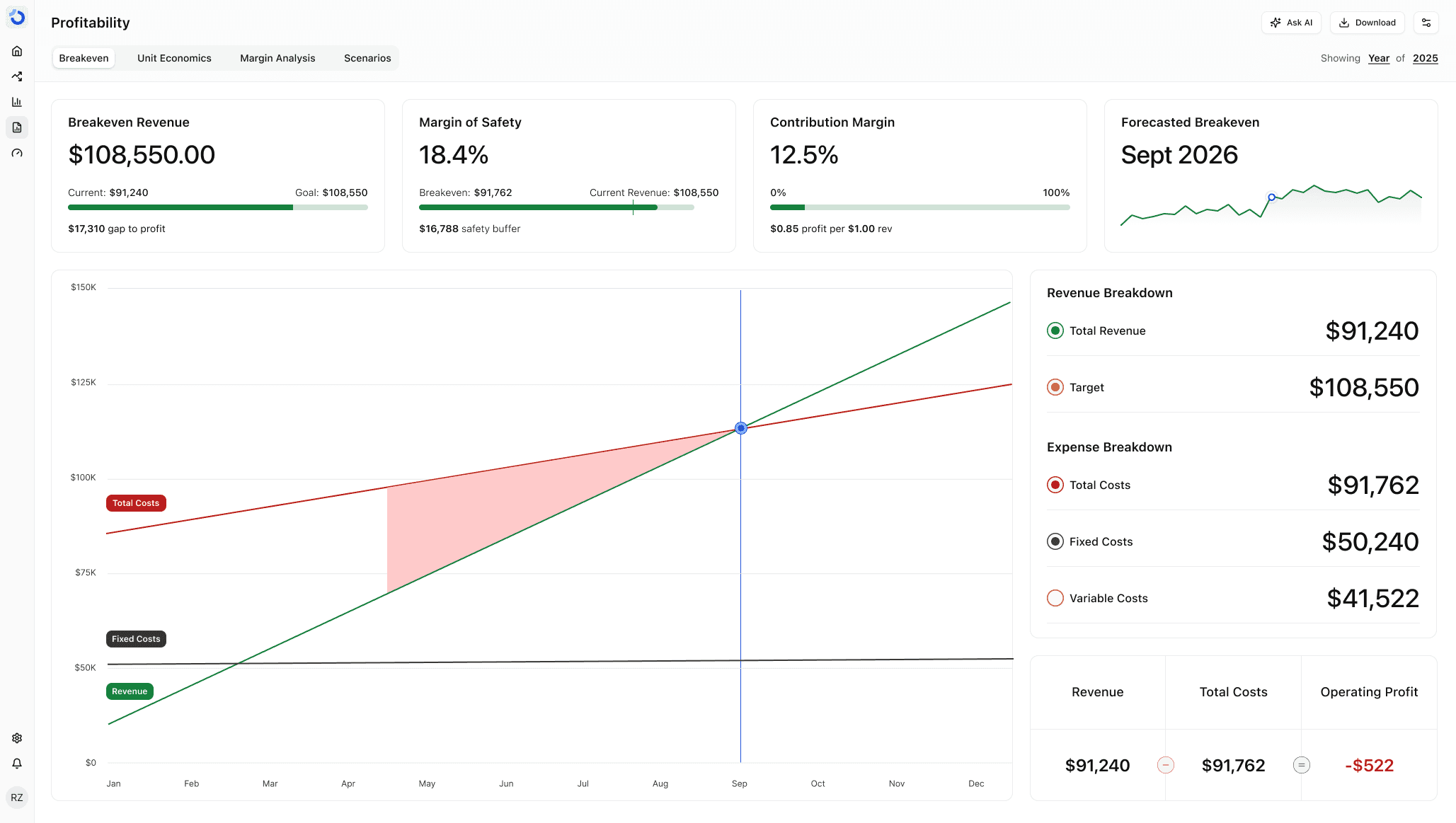
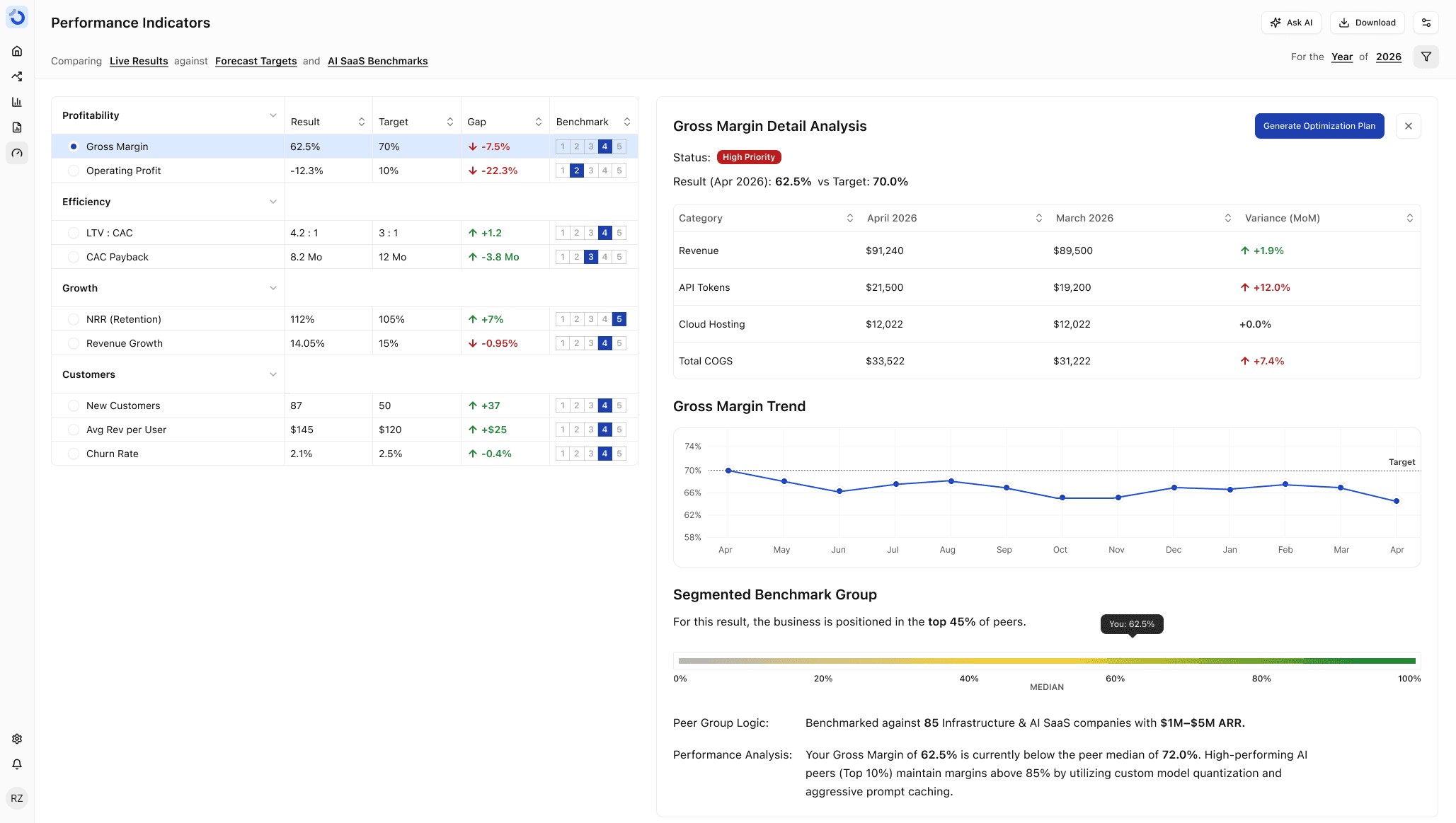
Working closely with the founding team, I owned product design end-to-end for a financial intelligence platform built specifically for AI SaaS companies. The core challenge was making complex financial data like gross margin gaps, NRR, LTV:CAC, and churn immediately actionable rather than just informational. I audited tools like Baremetrics, ChartMogul, and Mosaic to understand where they fell short, then designed a drilldown architecture that connects high-level KPI summaries to variance analysis, trend charts, and live peer benchmarks in a single panel. The product shipped across four fully designed modules, backed by a component library of 120+ variants, a structured design system with tokenized styles, and a tight handoff process kept in sync with the development team.
Working closely with the founding team, I owned product design end-to-end for a financial intelligence platform built specifically for AI SaaS companies. The core challenge was making complex financial data like gross margin gaps, NRR, LTV:CAC, and churn immediately actionable rather than just informational. I audited tools like Baremetrics, ChartMogul, and Mosaic to understand where they fell short, then designed a drilldown architecture that connects high-level KPI summaries to variance analysis, trend charts, and live peer benchmarks in a single panel. The product shipped across four fully designed modules, backed by a component library of 120+ variants, a structured design system with tokenized styles, and a tight handoff process kept in sync with the development team.
The Full Financial Picture: Live
02
UX Research
UX Research
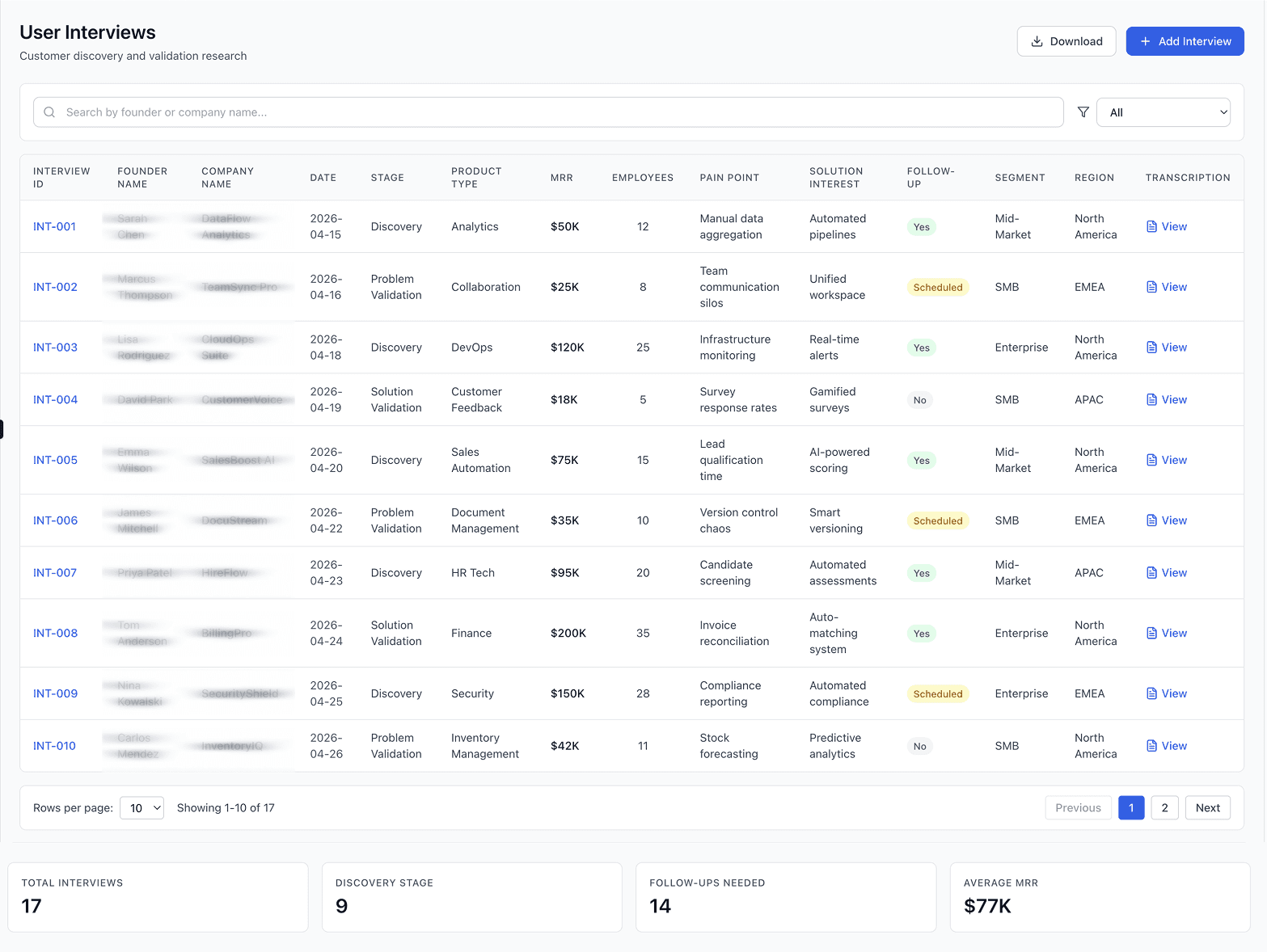
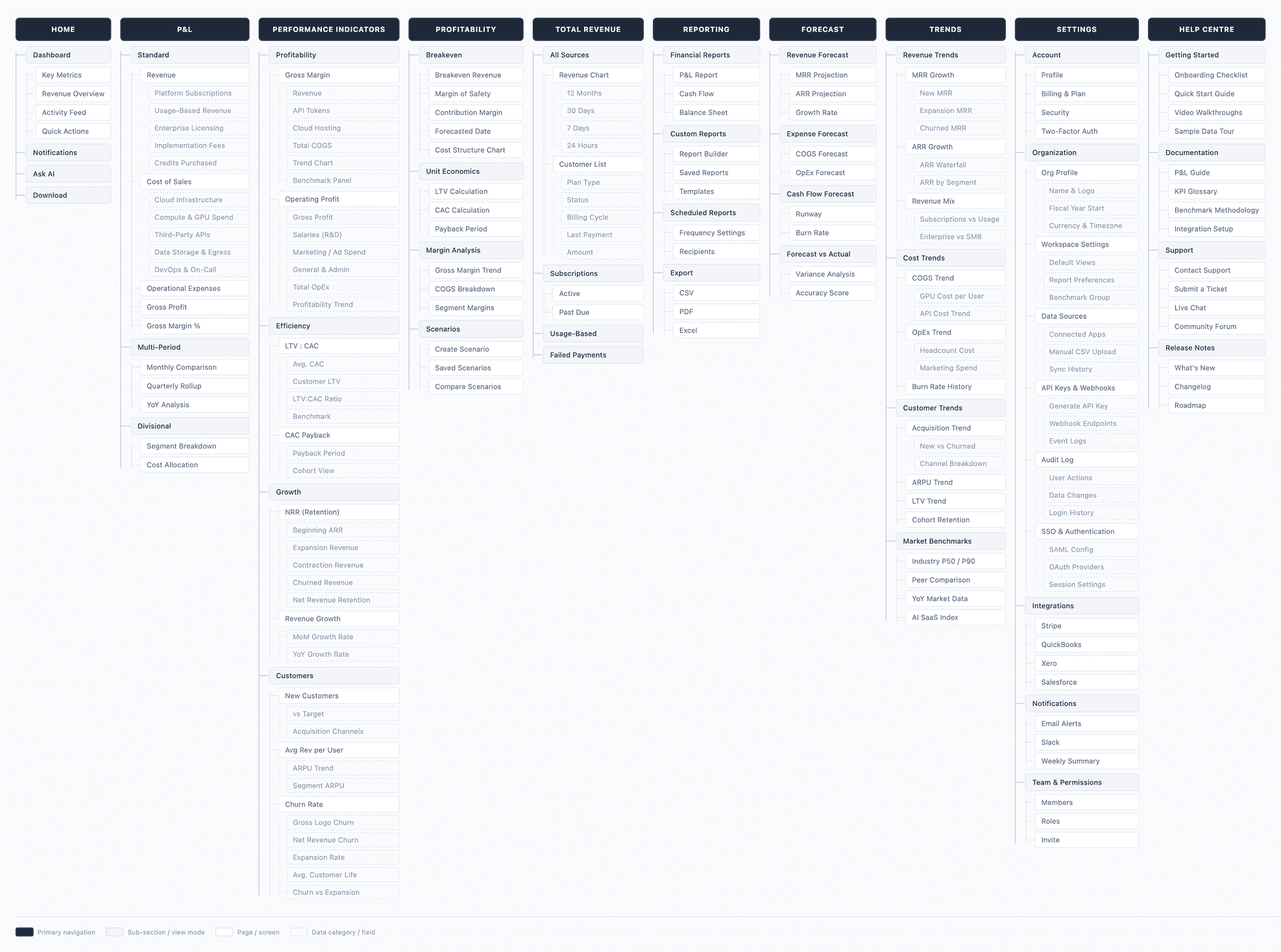
I started with a founder workshop to align on project scope, timeline, and deliverables — asking questions to understand the business context, the target user, and what success looked like for the product. From that session I proposed a UX research blueprint covering the methods, sequencing, and artifacts for the full design process. Research then moved into 17 semi-structured interviews with SaaS founders across North America, EMEA, and APAC, uncovering that most spent 8 to 12 hours a week on manual financial tasks with no clear system for tracking performance against peers. Those conversations surfaced three distinct mental models: founders think separately about what happened, how they are performing, and what comes next. The IA was built around that split. Card sorting with 14 participants validated the groupings and confirmed the structure before a single wireframe was drawn.
I started with a founder workshop to align on project scope, timeline, and deliverables — asking questions to understand the business context, the target user, and what success looked like for the product. From that session I proposed a UX research blueprint covering the methods, sequencing, and artifacts for the full design process. Research then moved into 17 semi-structured interviews with SaaS founders across North America, EMEA, and APAC, uncovering that most spent 8 to 12 hours a week on manual financial tasks with no clear system for tracking performance against peers. Those conversations surfaced three distinct mental models: founders think separately about what happened, how they are performing, and what comes next. The IA was built around that split. Card sorting with 14 participants validated the groupings and confirmed the structure before a single wireframe was drawn.
03
Design System
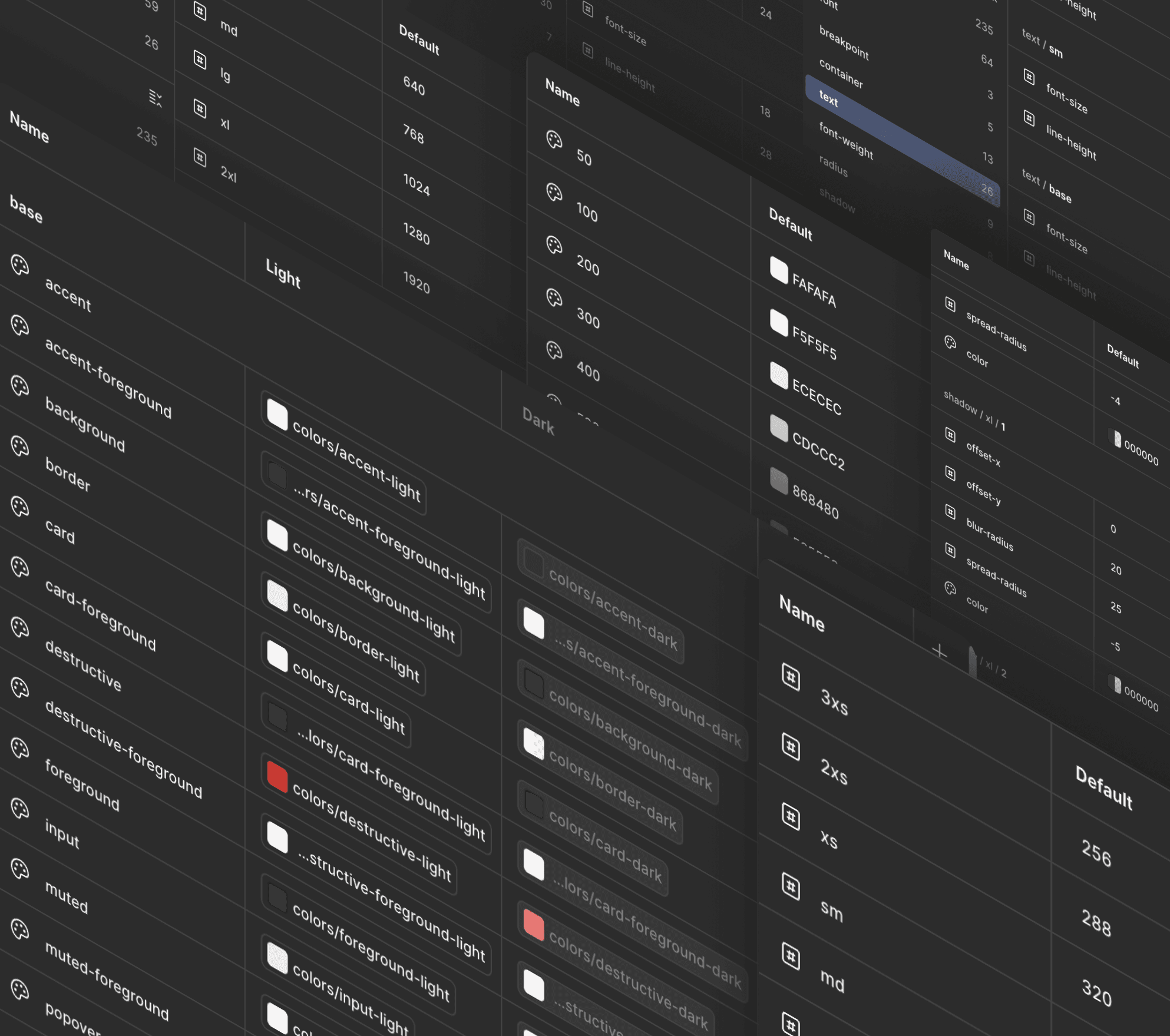
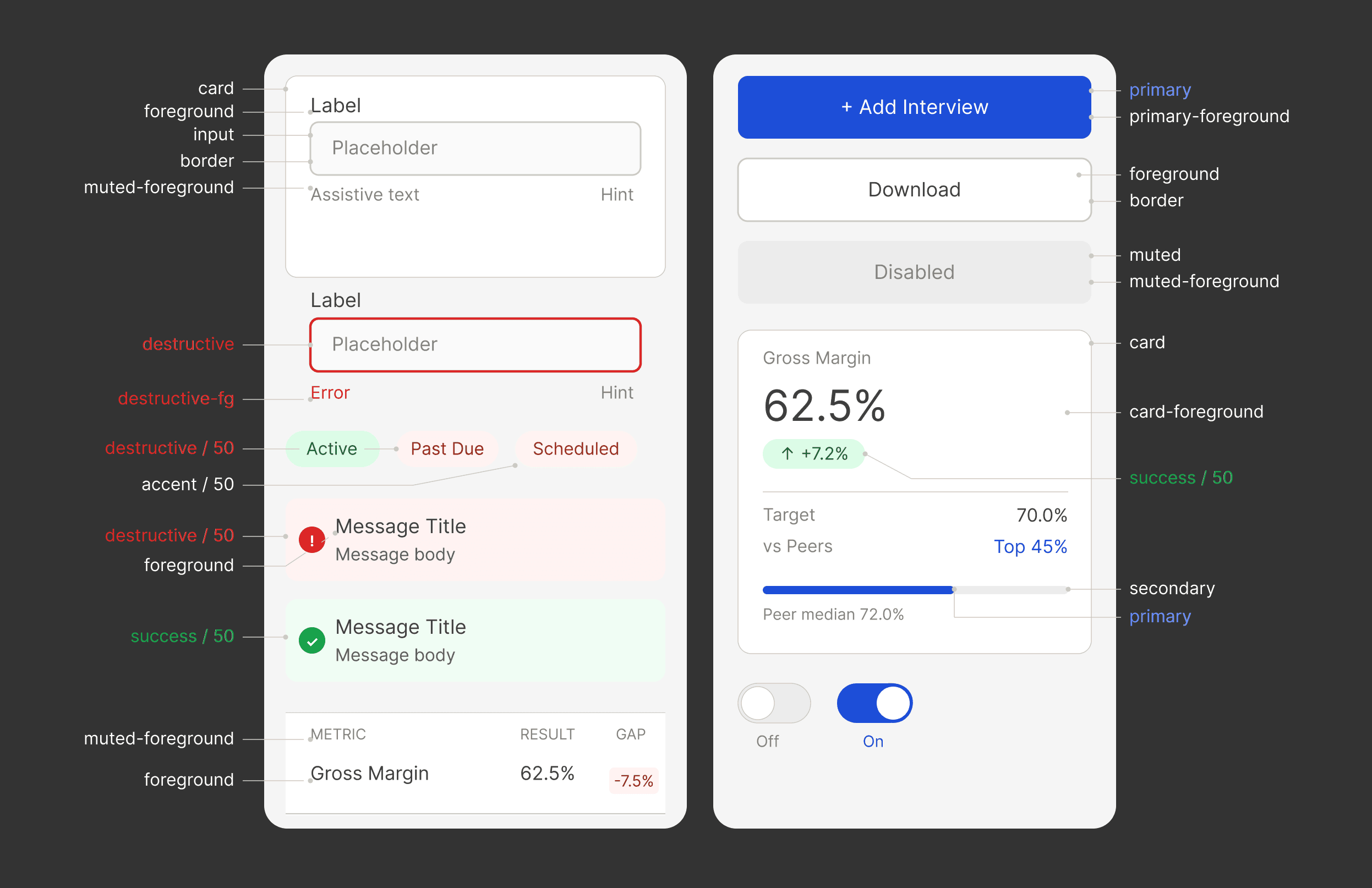
I built the design system through working sessions with the development team where we aligned on which shadcn/ui components we would use, how we would name and structure our shared semantic language, and how design decisions would map directly to code. Beyond the token layer, I set up the full design system infrastructure: component documentation with usage guidelines and do/don't examples, a versioning system to track changes across design and code in sync, contribution guidelines so the system could scale without breaking consistency, and a changelog maintained throughout the project so developers always knew what had changed and why.
Grounding the system in shadcn/ui meant the development team never encountered an unfamiliar token name in the handoff — every component I delivered was immediately implementable, reducing overall time to production and giving us full dark mode support without any rework.
I built the design system through working sessions with the development team where we aligned on which shadcn/ui components we would use, how we would name and structure our shared semantic language, and how design decisions would map directly to code. Beyond the token layer, I set up the full design system infrastructure: component documentation with usage guidelines and do/don't examples, a versioning system to track changes across design and code in sync, contribution guidelines so the system could scale without breaking consistency, and a changelog maintained throughout the project so developers always knew what had changed and why.
Grounding the system in shadcn/ui meant the development team never encountered an unfamiliar token name in the handoff — every component I delivered was immediately implementable, reducing overall time to production and giving us full dark mode support without any rework.
04
Final Designs
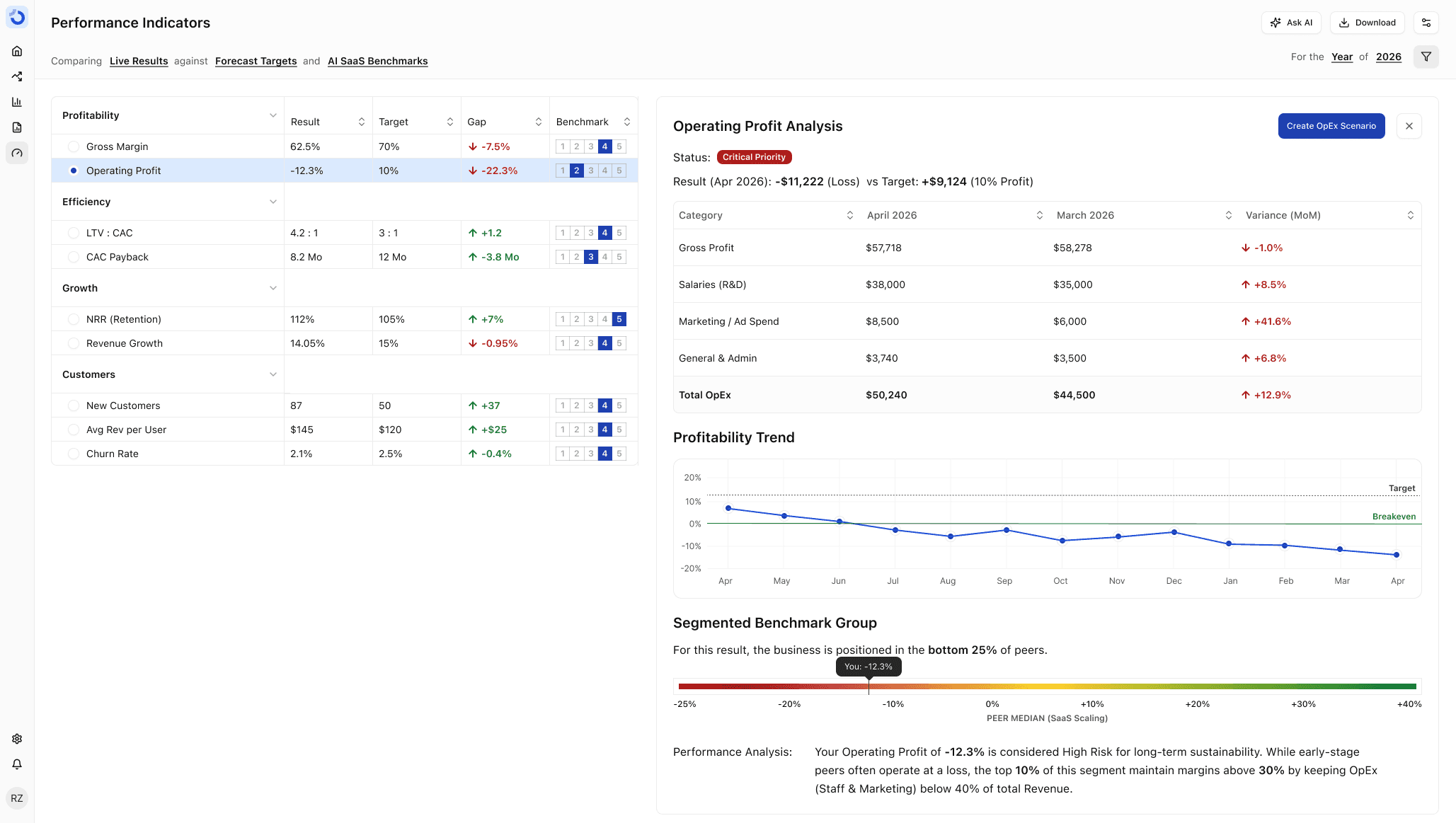
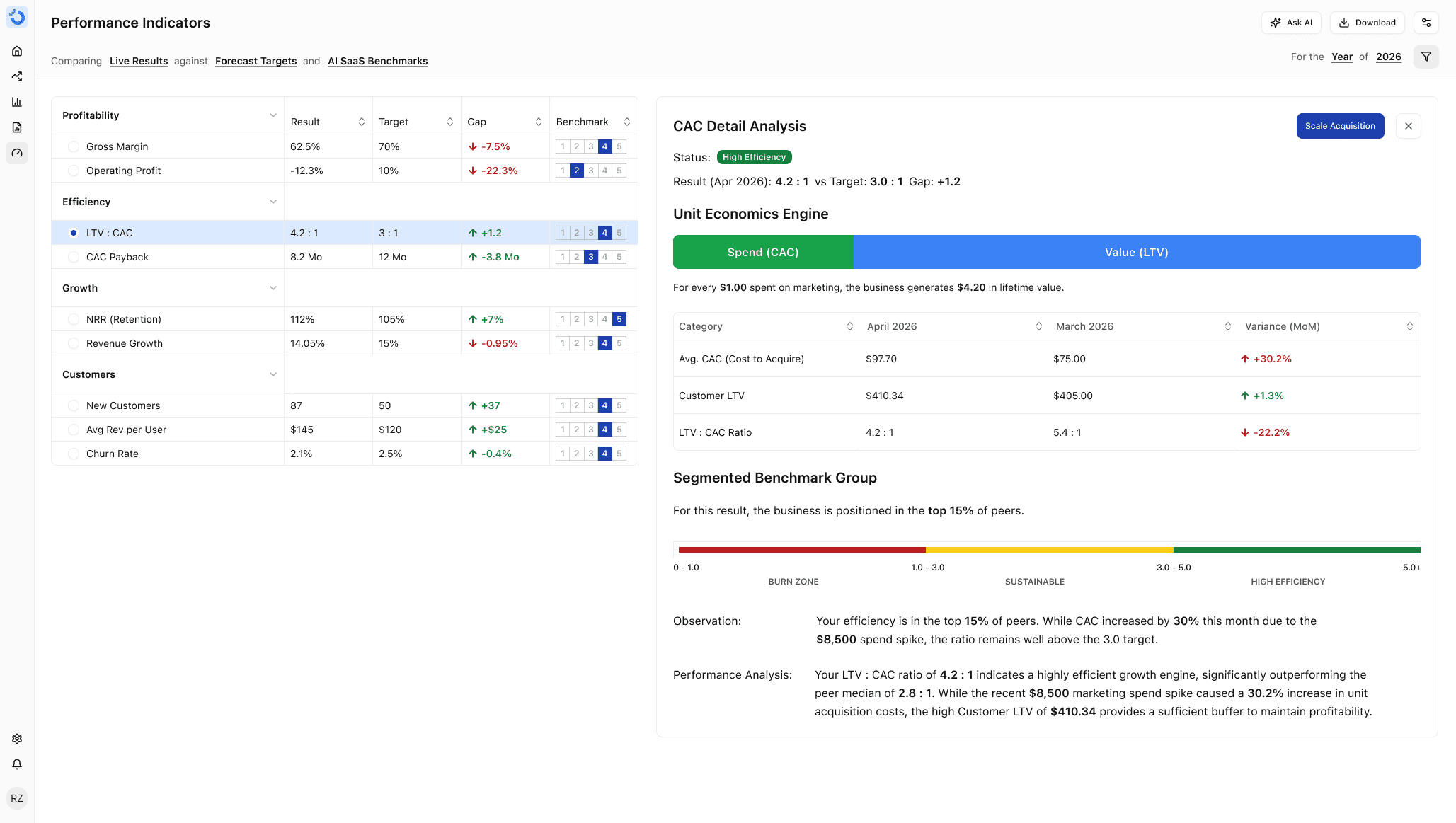
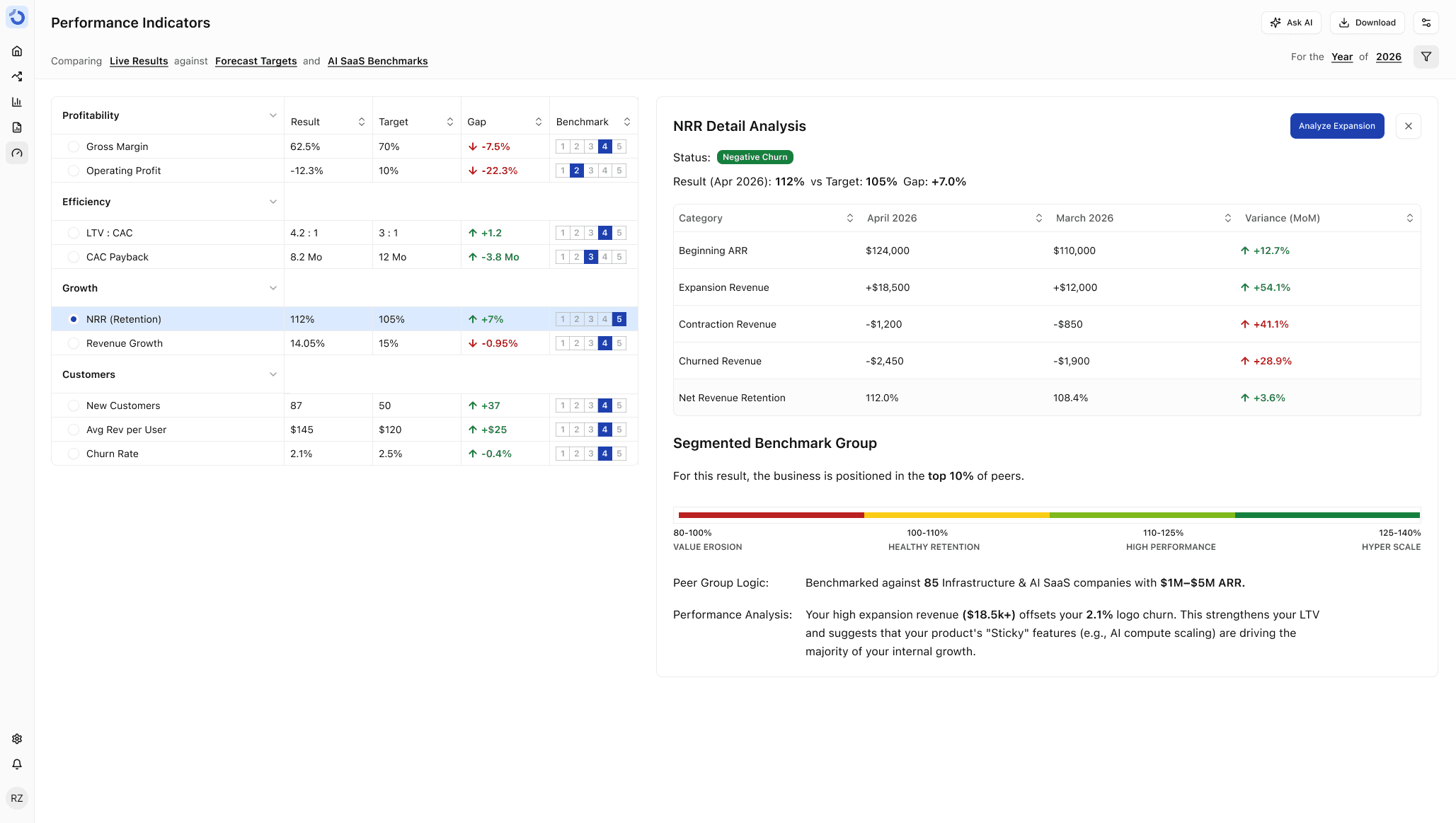
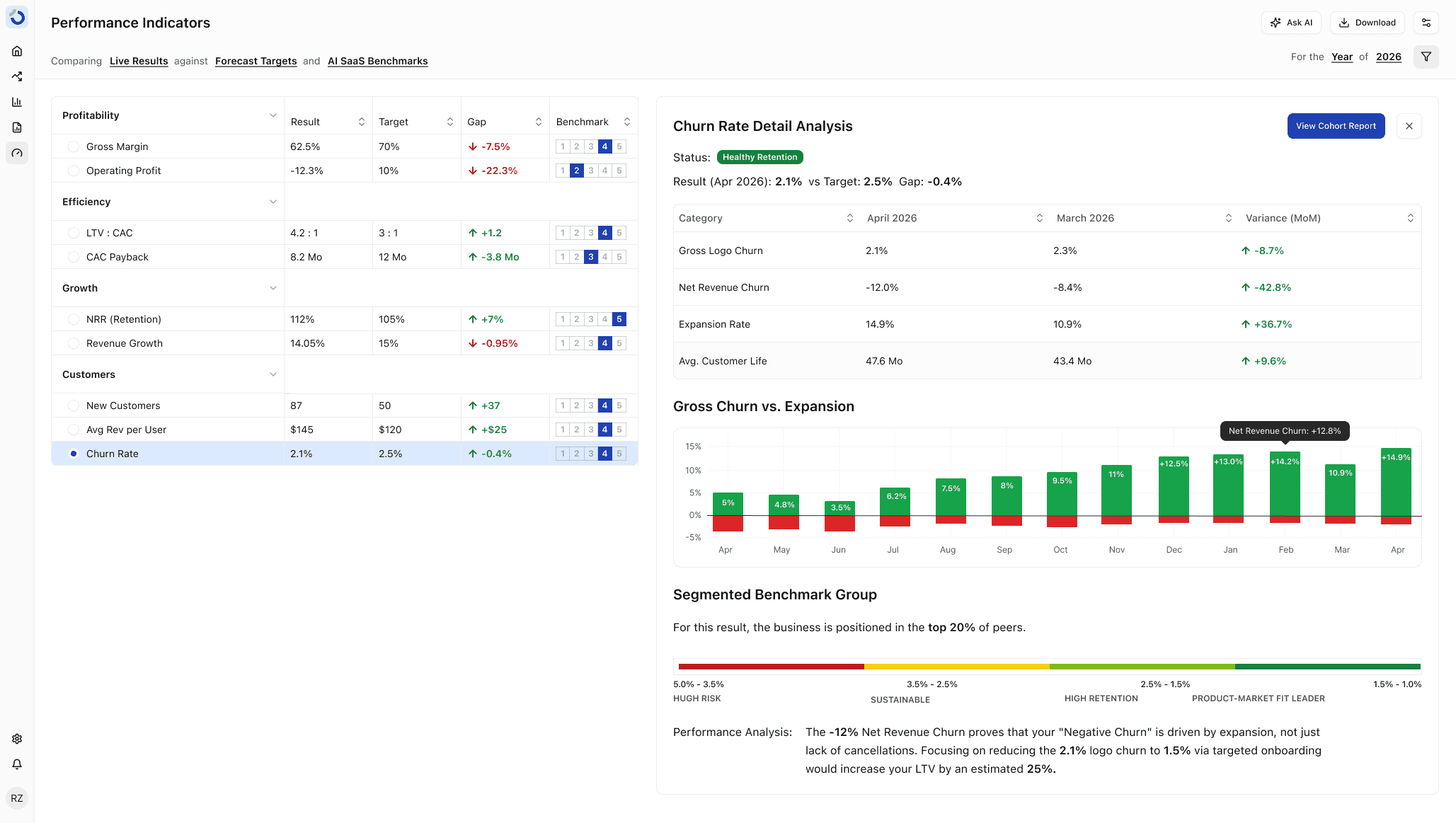
Every design decision in this product traces back to a single research finding: founders do not need more data, they need to know what their data means. That insight shaped everything from information hierarchy to how I approached both the happy path and edge cases. Financial products rarely break on missing data — they break on conflicting data, and I designed for exactly that: KPIs contradicting each other, metrics sitting outside plottable benchmark ranges, and forecast-to-actual divergence significant enough to distort chart scale.
The drilldown panel was the most technically complex component, built to move a founder from a headline number to a full diagnosis in three clicks rather than three tools. The benchmark visualization required the most iteration — a raw percentage told founders nothing, so I replaced it with a segmented positioning bar that communicates peer standing instantly without calculation. Light and dark mode were built in from day one through the semantic token system, so no component ever needed to be designed twice.
Every design decision in this product traces back to a single research finding: founders do not need more data, they need to know what their data means. That insight shaped everything from information hierarchy to how I approached both the happy path and edge cases. Financial products rarely break on missing data — they break on conflicting data, and I designed for exactly that: KPIs contradicting each other, metrics sitting outside plottable benchmark ranges, and forecast-to-actual divergence significant enough to distort chart scale.
The drilldown panel was the most technically complex component, built to move a founder from a headline number to a full diagnosis in three clicks rather than three tools. The benchmark visualization required the most iteration — a raw percentage told founders nothing, so I replaced it with a segmented positioning bar that communicates peer standing instantly without calculation. Light and dark mode were built in from day one through the semantic token system, so no component ever needed to be designed twice.
05
Conclusion
Building this product end to end, from the first founder workshop through to a shipped token-driven design system, reinforced something I already believed but now understand more deeply: the best financial tools do not show you data, they help you think. The user interviews and mental models that shaped the architecture never left the room — they stayed present in every component decision, every status label, and every annotation in the developer handoff. The most valuable skill I developed here was designing for trust. Every component, every edge case, every piece of the system was in service of a founder who needed to make a real decision with real consequences. The product is now entering its Seed round, which is the best possible signal that the design did its job.
More works

Lifedata.ai
A platform for Omnichannel Customer Experience.
Lifedata.ai
A platform for Omnichannel Customer Experience.

Tower.dev
A Python-native infrastructure platform.
Tower.dev
A Python-native infrastructure platform.
Contact me
I Am All Ears!
Contact me
I Am All Ears!
Contact me
I Am All Ears!

The kind of a designer that feels like a keeper.
About
Contact
© 2014-2025. Designed by zdoor ruslan.
The kind of a designer that feels like a keeper.
About
Contact
© 2014-2025. Designed by zdoor ruslan.
The kind of a designer that feels like a keeper.
About
Contact
© 2014-2025. Designed by zdoor ruslan.