Tower.dev
End-to-end design ownership across product, branding, and front-end implementation for a data infrastructure platform built to run AI-powered data apps at scale.
Services
product design
Branding
Front-end
Team
7 People
When I joined Tower the product existed as code and conviction. My job was to turn it into something developers would trust. I started by running a founding team workshop: users, goals, success metrics, brand direction, and competitive positioning all mapped before a single frame was opened. From that session I built a research and design blueprint that structured the entire engagement: competitor analysis, Kano modelling from user interviews to separate table-stakes features from genuine differentiators, feature prioritization, and a full information architecture. The product design covered the flows that matter most for a developer tool: a frictionless onboarding experience, the critical path from adding your first data app to running it in production, environment and settings systems, and the full spectrum of system states. I then designed and implemented the marketing website, giving Tower a public face that could hold its own in a competitive infrastructure market.
When I joined Tower the product existed as code and conviction. My job was to turn it into something developers would trust. I started by running a founding team workshop: users, goals, success metrics, brand direction, and competitive positioning all mapped before a single frame was opened. From that session I built a research and design blueprint that structured the entire engagement: competitor analysis, Kano modelling from user interviews to separate table-stakes features from genuine differentiators, feature prioritization, and a full information architecture. The product design covered the flows that matter most for a developer tool: a frictionless onboarding experience, the critical path from adding your first data app to running it in production, environment and settings systems, and the full spectrum of system states. I then designed and implemented the marketing website, giving Tower a public face that could hold its own in a competitive infrastructure market.
01
UX Research
UX Research
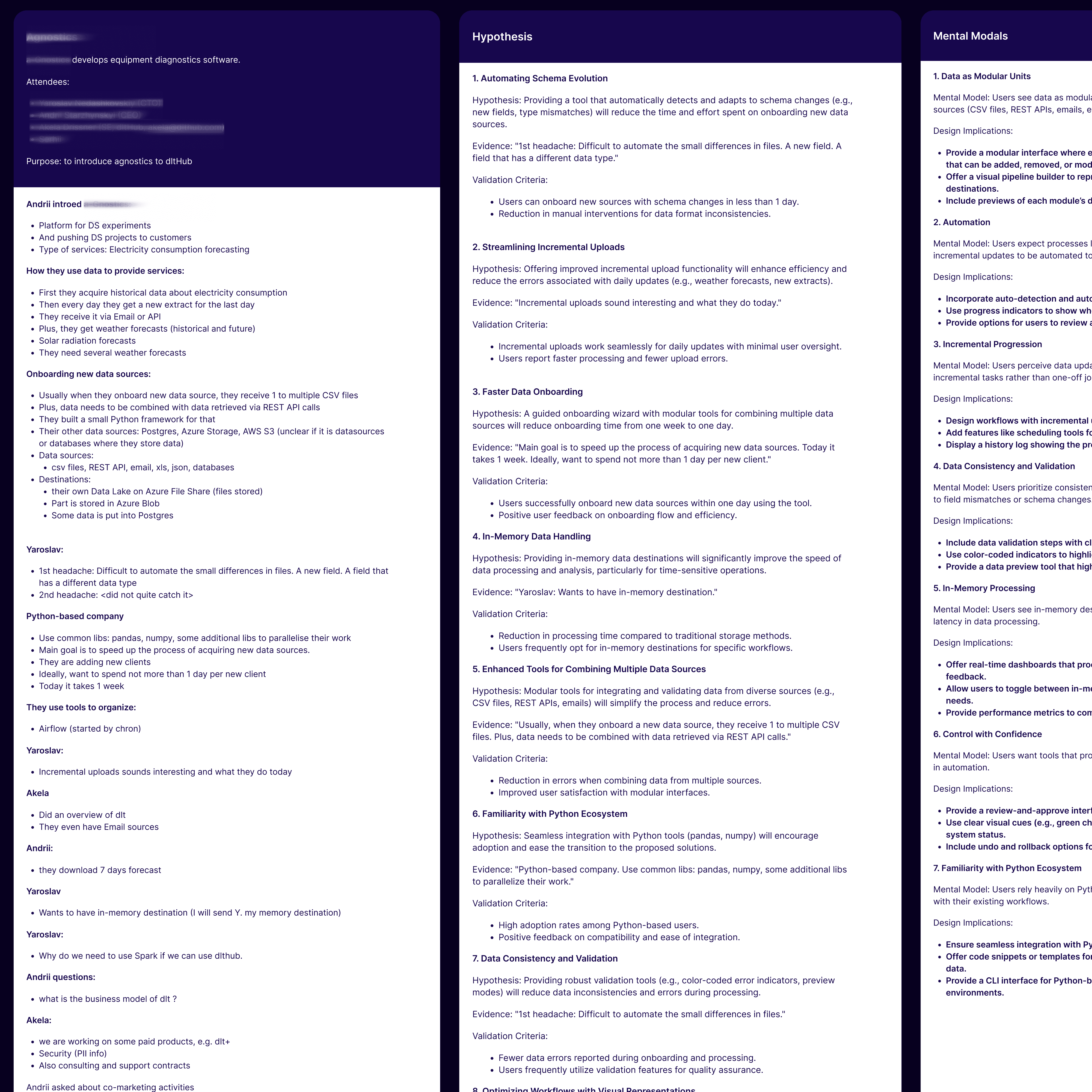
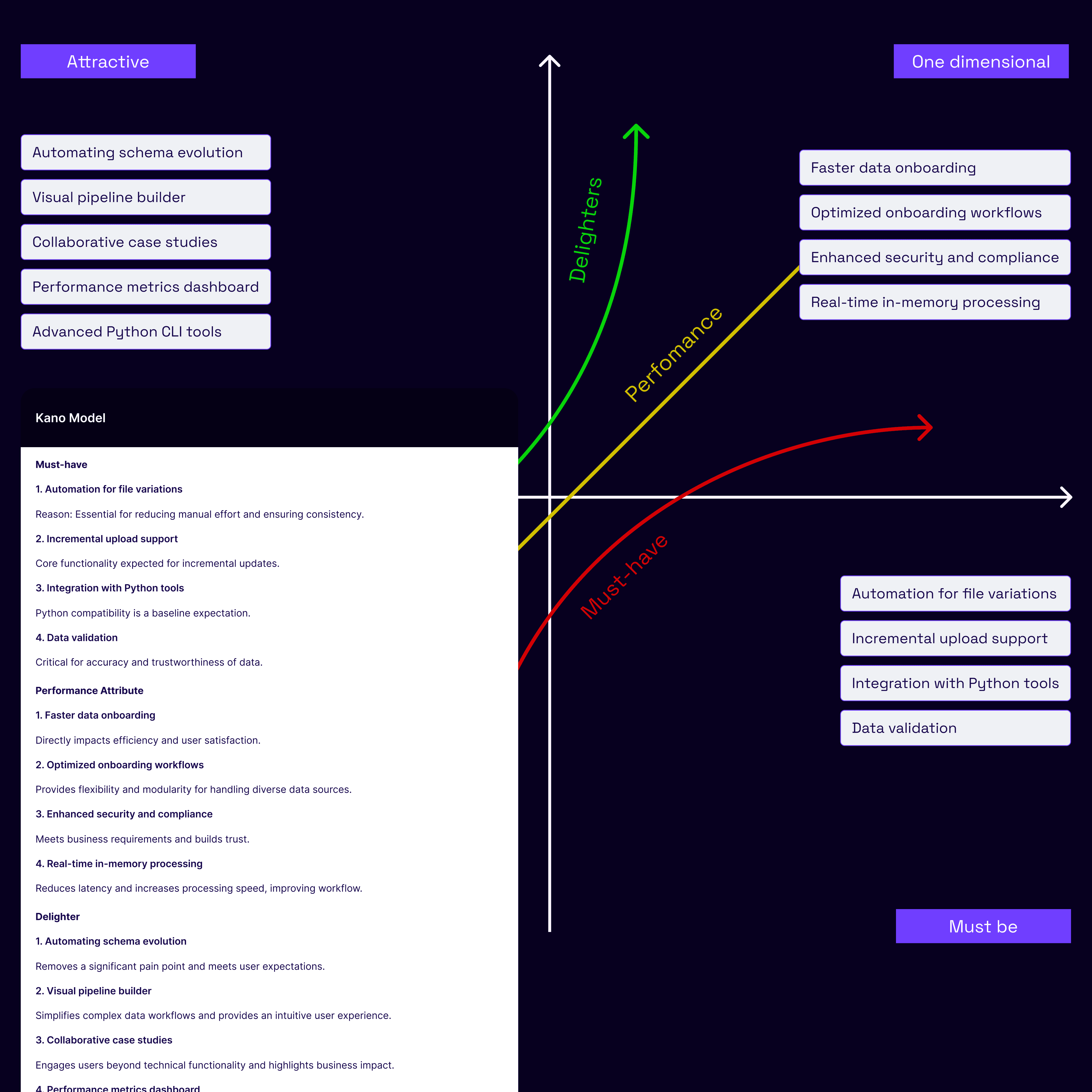
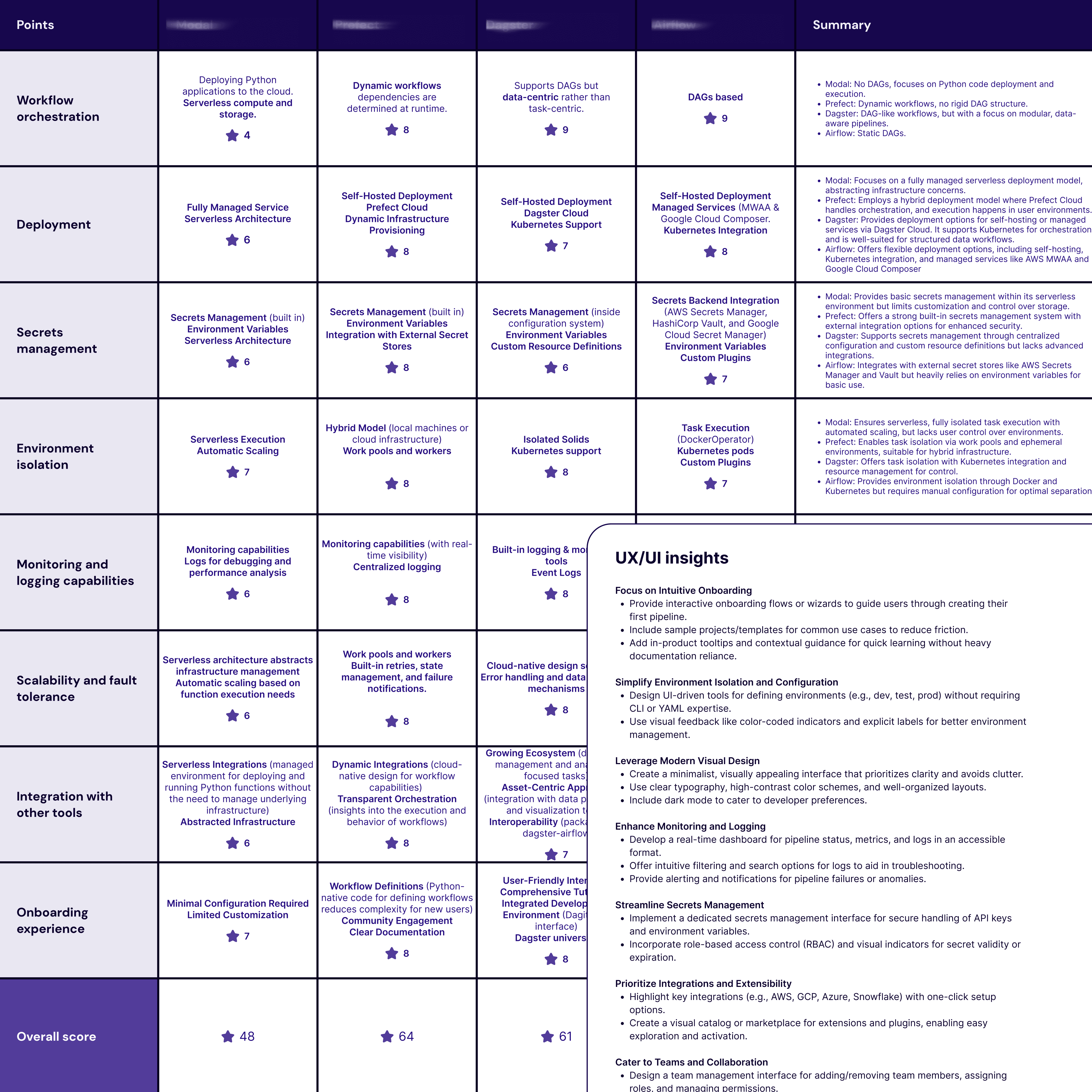
Every product decision I made at Tower had a research reason behind it. Over 20 interviews with founders, engineers, and CEOs across data and AI companies gave me the raw material — a detailed picture of how technical teams operate infrastructure today, where they lose time, and what they had stopped expecting tools to solve for them. A Kano model analysis structured that material into a clear product direction, shaping which features made it into the core experience and which defined Tower's edge in the market. A competitor audit across the leading orchestration platforms confirmed where the gaps were and where design could do something the category had not done before. The information architecture, the onboarding flow, the environment system, the monitoring layer — each one was designed with a specific research finding in mind.
Every product decision I made at Tower had a research reason behind it. Over 20 interviews with founders, engineers, and CEOs across data and AI companies gave me the raw material — a detailed picture of how technical teams operate infrastructure today, where they lose time, and what they had stopped expecting tools to solve for them. A Kano model analysis structured that material into a clear product direction, shaping which features made it into the core experience and which defined Tower's edge in the market. A competitor audit across the leading orchestration platforms confirmed where the gaps were and where design could do something the category had not done before. The information architecture, the onboarding flow, the environment system, the monitoring layer — each one was designed with a specific research finding in mind.
02
Design System
A workshop with the founder and engineering team established the component library, semantic language, and contribution framework before any screens were designed. We agreed on Mantine as the foundation and I built the full atomic system on top of it: color palette, typescale, spacing, grid, iconography, elevation, border radius, and motion, with a two-layer token system for light and dark mode handed off through Figma Variables.
Every component was built with Figma's component properties handling the full variant matrix across default, hover, focus, active, disabled, error, and loading states. The system shipped with documentation, usage guidelines, do/don't examples, contribution rules, versioning, and a changelog, giving the engineering team a single source of truth they could build from without translation.
A workshop with the founder and engineering team established the component library, semantic language, and contribution framework before any screens were designed. We agreed on Mantine as the foundation and I built the full atomic system on top of it: color palette, typescale, spacing, grid, iconography, elevation, border radius, and motion, with a two-layer token system for light and dark mode handed off through Figma Variables.
Every component was built with Figma's component properties handling the full variant matrix across default, hover, focus, active, disabled, error, and loading states. The system shipped with documentation, usage guidelines, do/don't examples, contribution rules, versioning, and a changelog, giving the engineering team a single source of truth they could build from without translation.


03
Final Designs
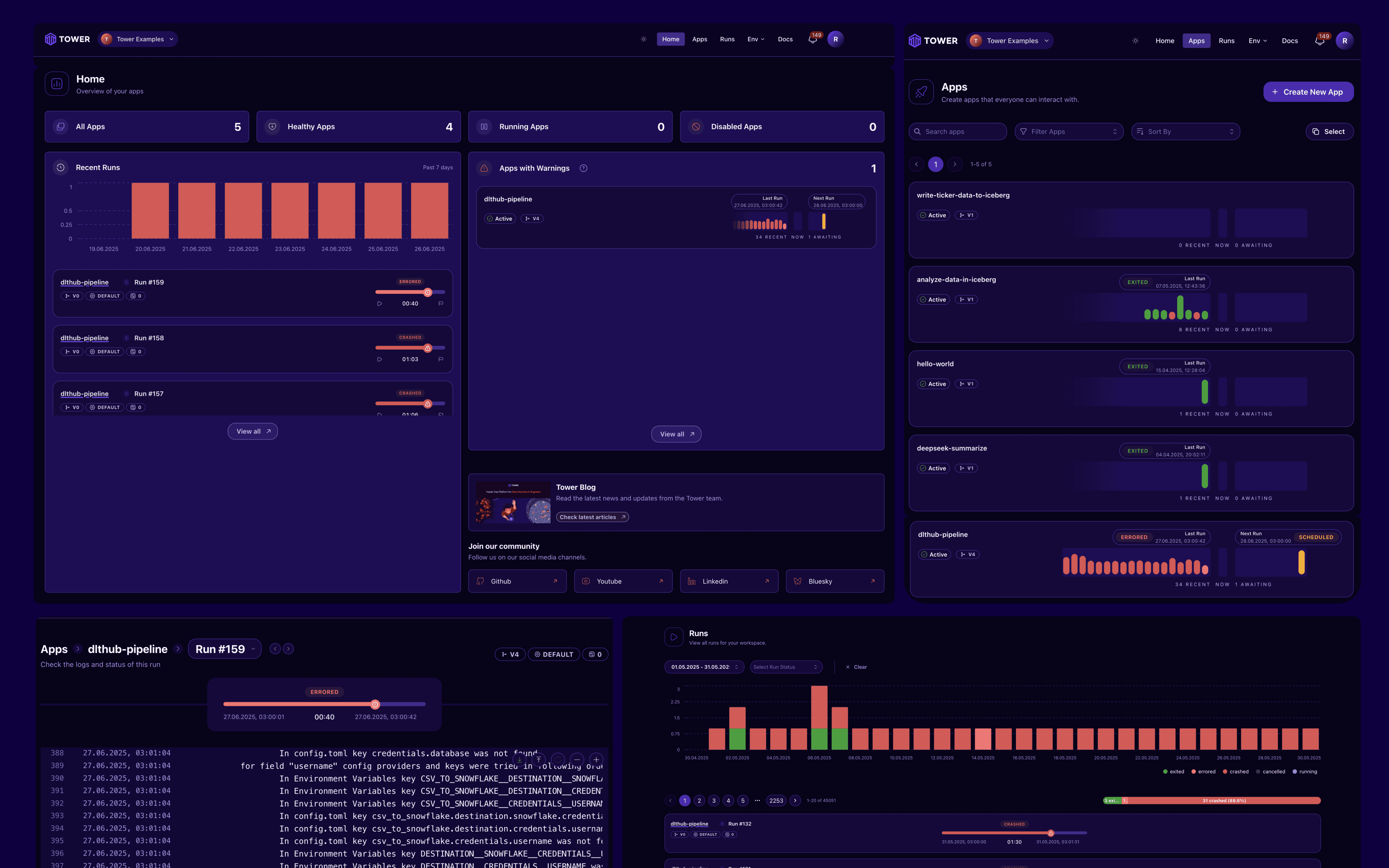
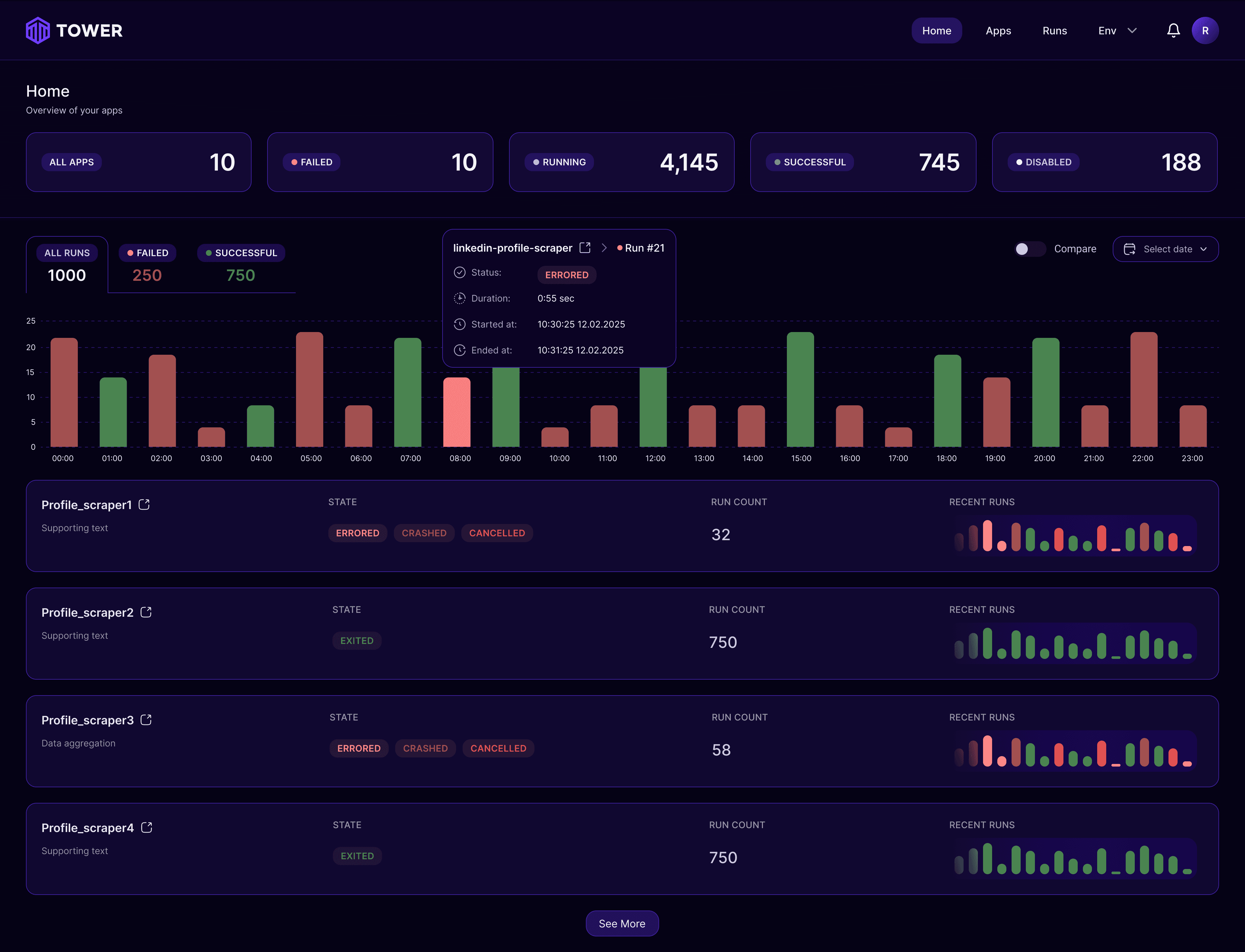
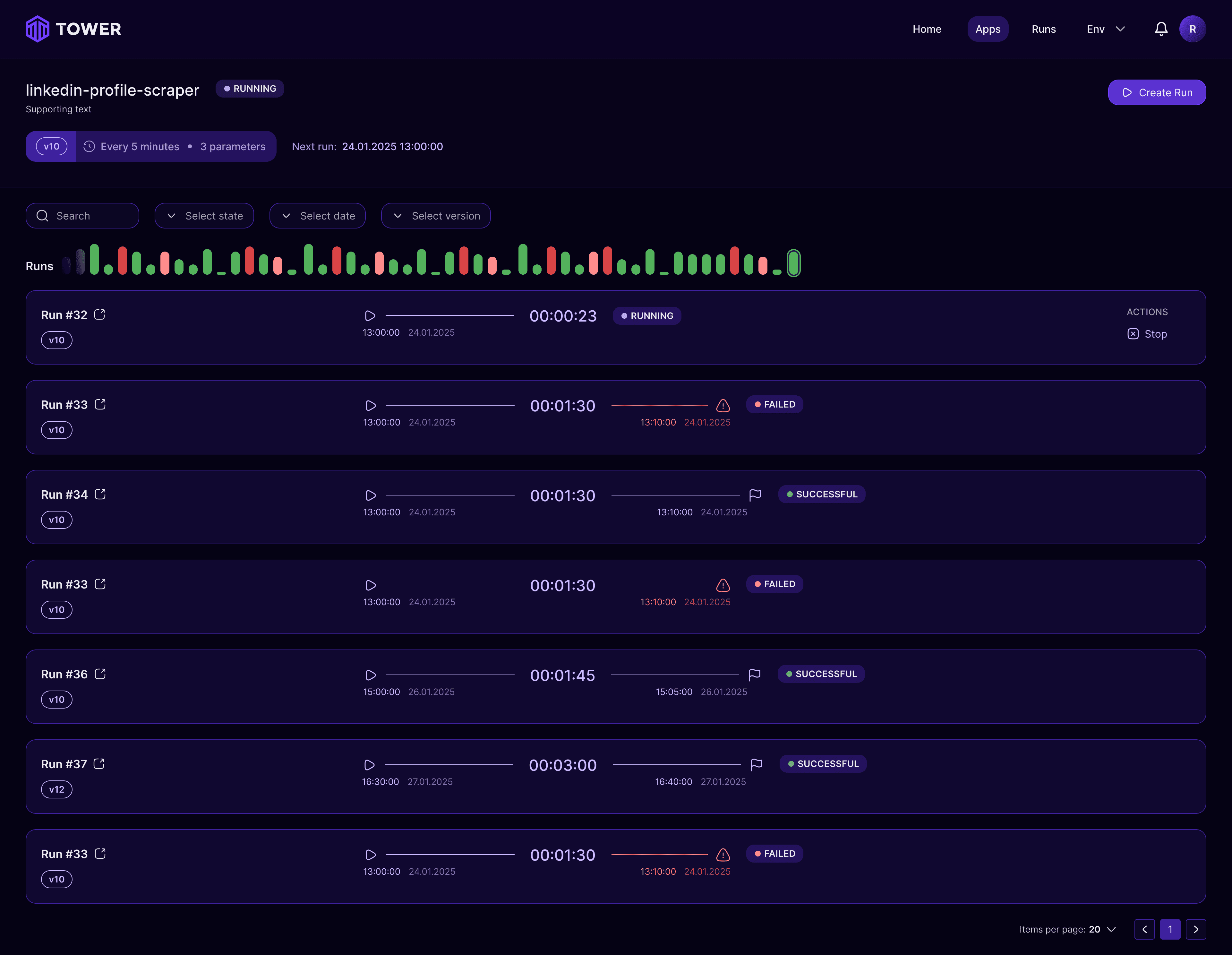
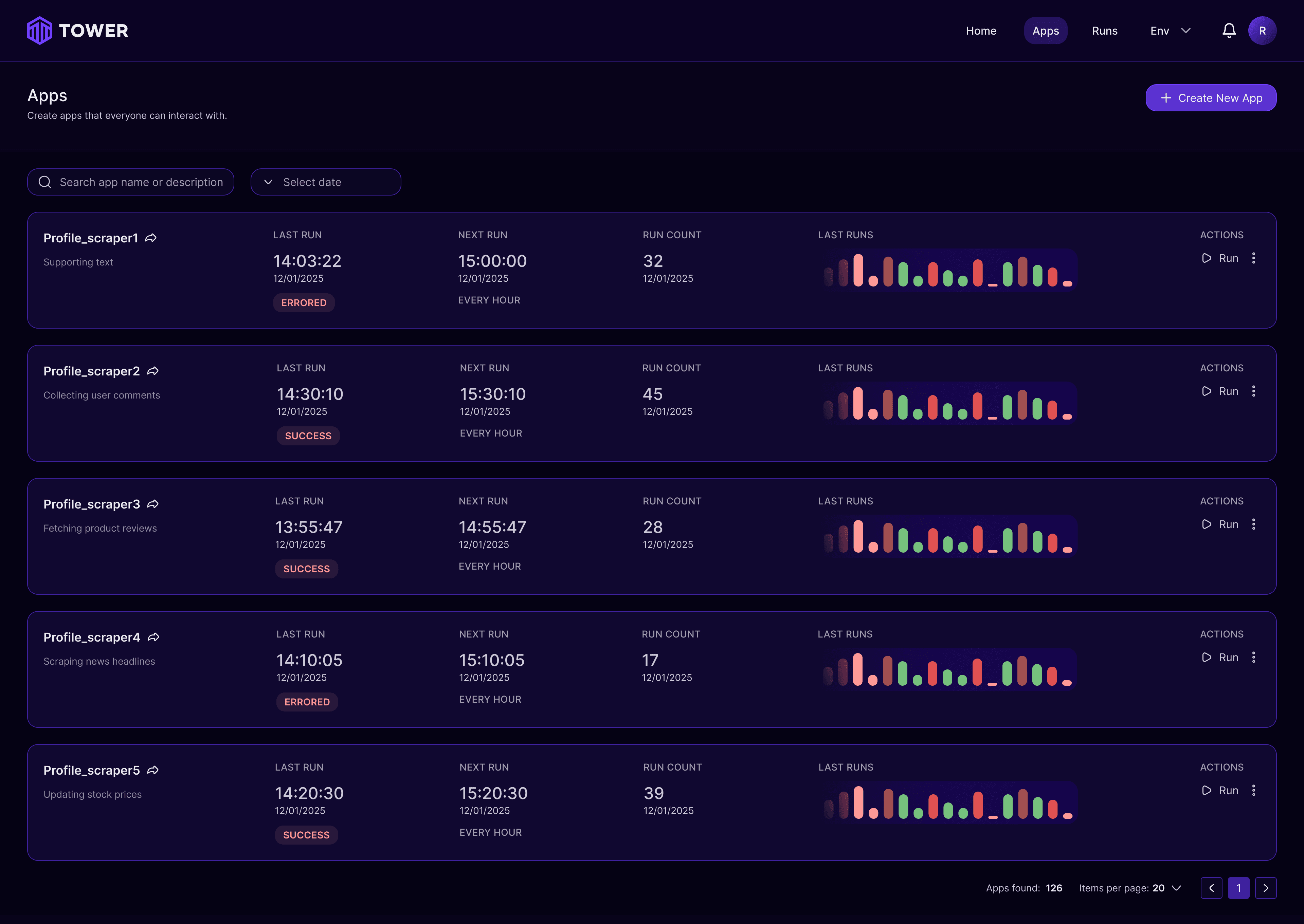
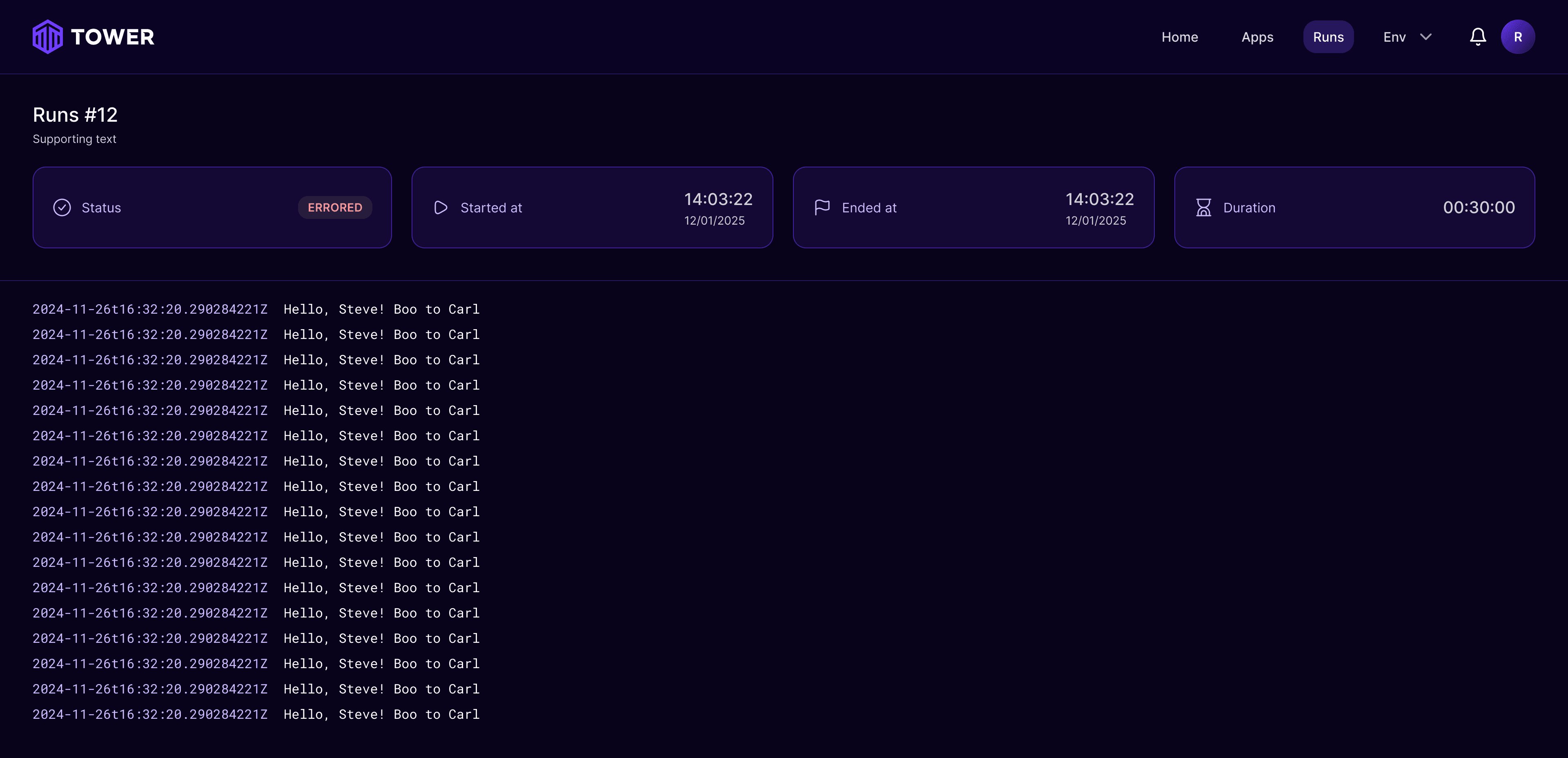
The product design covered the full core experience: a home dashboard giving developers an immediate read on the health of everything running, an apps view for managing and monitoring individual pipelines, and a run detail page that turned execution data into something a developer could actually diagnose from. The app card component was one of the most iterated elements in the product, designed in six layout variants covering every density context from compact list views to expanded monitoring cards.
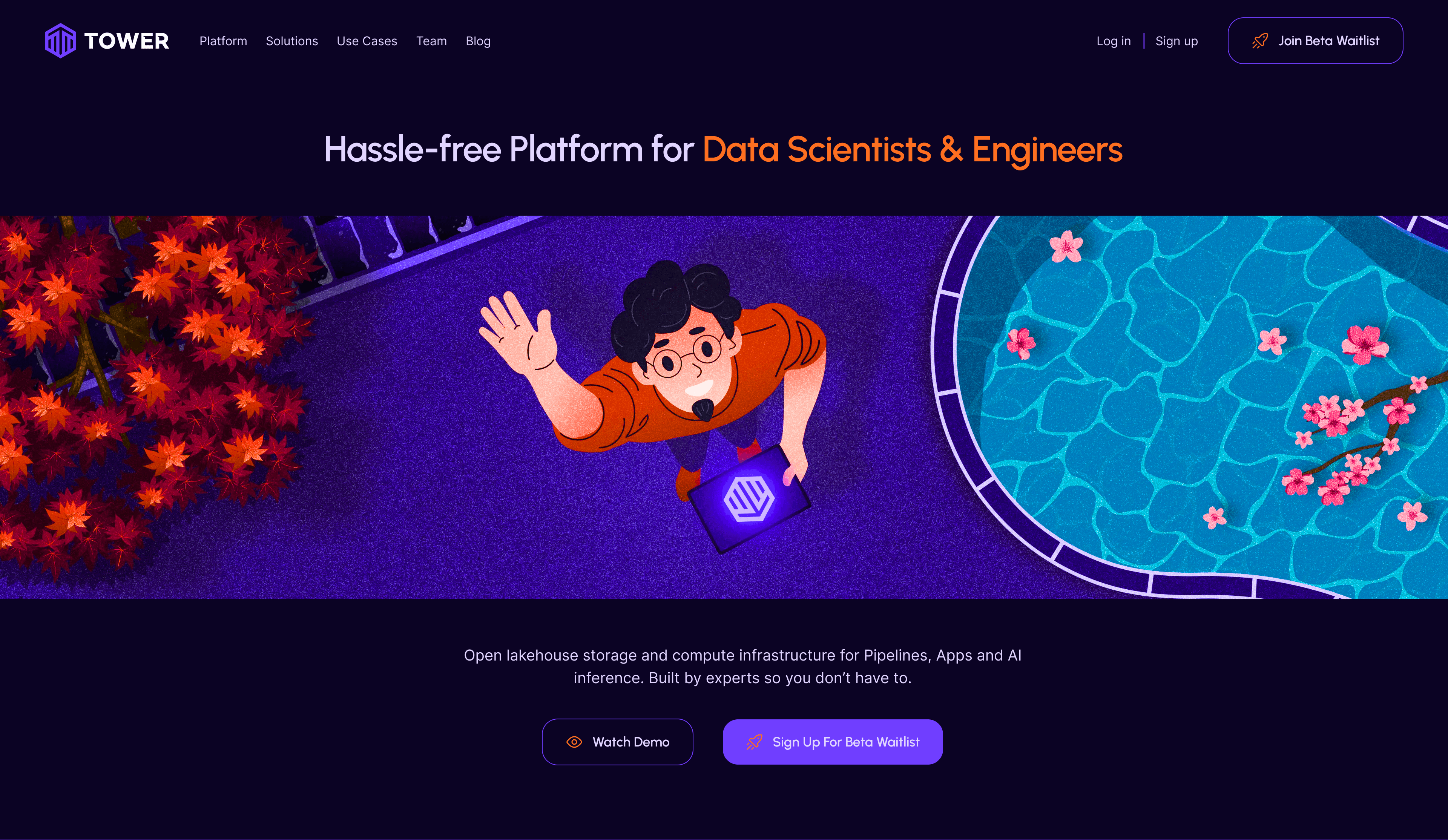
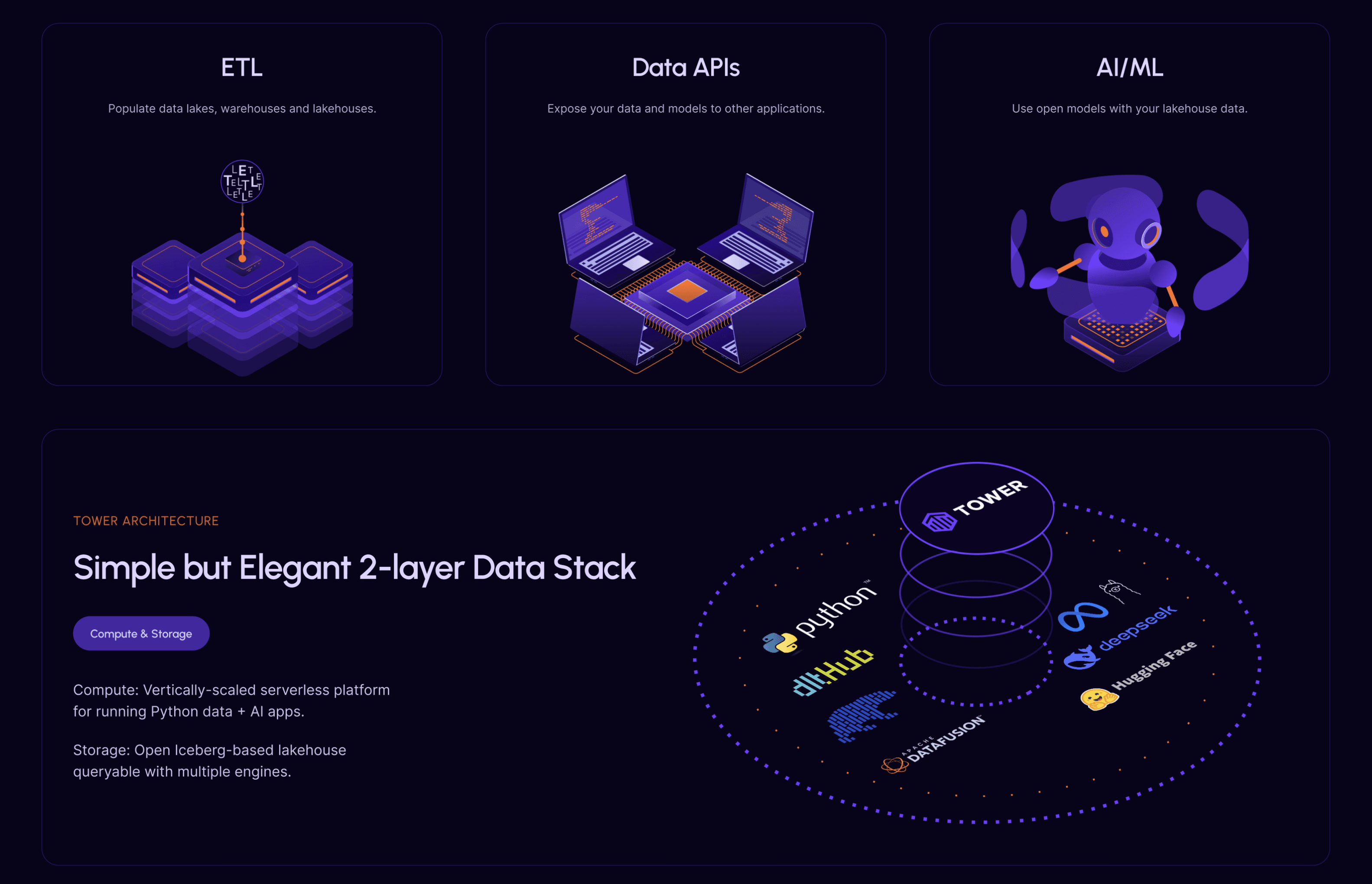
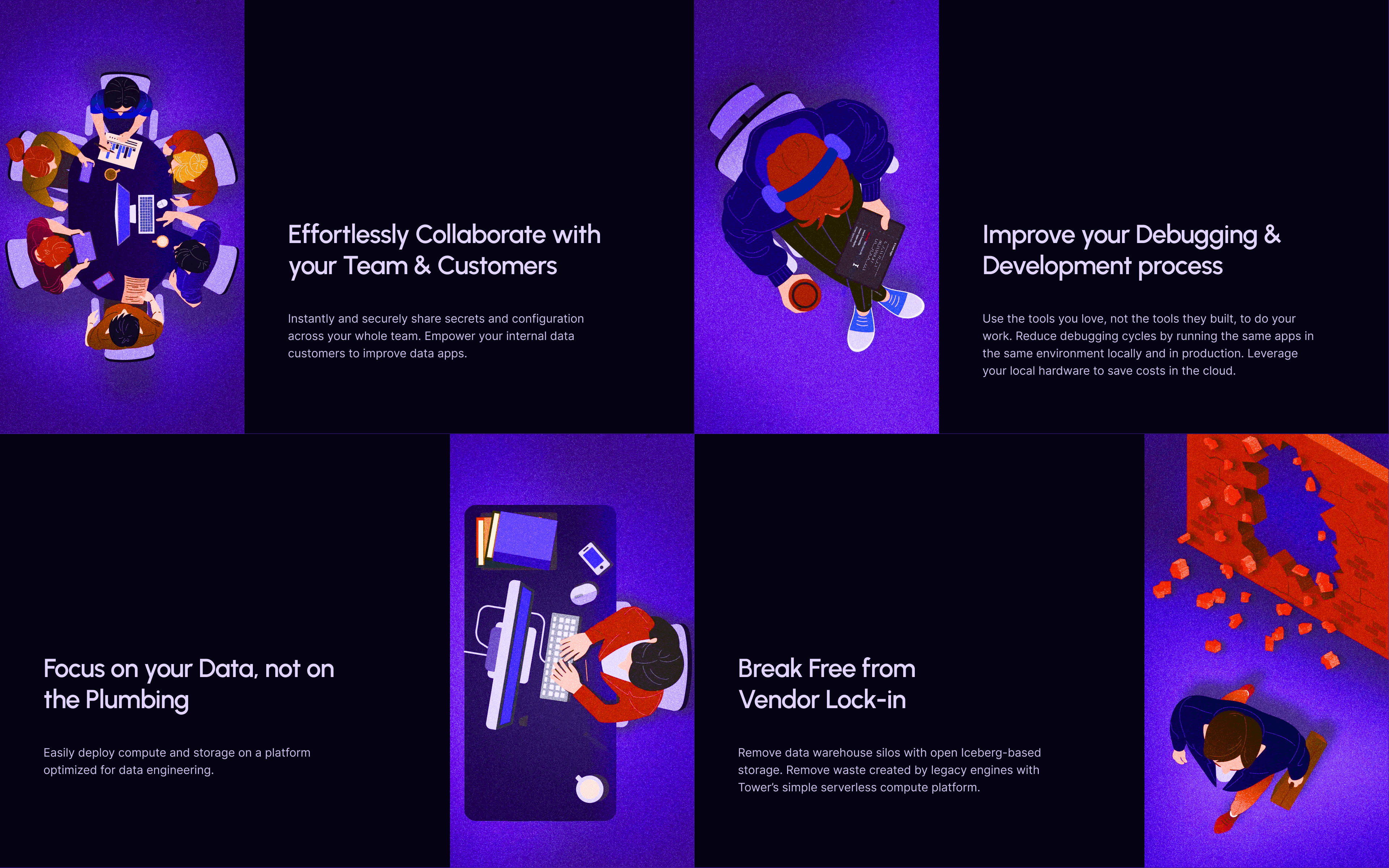
The marketing website was designed and implemented as a separate but connected challenge: translating a deeply technical product into a public presence that felt credible to the developers Tower was built for, using editorial illustration, a developer-native dark aesthetic, and a beta waitlist flow as the primary conversion moment.
The product design covered the full core experience: a home dashboard giving developers an immediate read on the health of everything running, an apps view for managing and monitoring individual pipelines, and a run detail page that turned execution data into something a developer could actually diagnose from. The app card component was one of the most iterated elements in the product, designed in six layout variants covering every density context from compact list views to expanded monitoring cards.
The marketing website was designed and implemented as a separate but connected challenge: translating a deeply technical product into a public presence that felt credible to the developers Tower was built for, using editorial illustration, a developer-native dark aesthetic, and a beta waitlist flow as the primary conversion moment.

04
Conclusion
Building Tower as a founding designer was the closest I have come to building a company without founding one. Every decision I made carried real weight — from the research blueprint that shaped the product direction, to the design system that gave the engineering team a foundation to build on, to the final screens that developers would open every day to understand the health of their infrastructure. The product shipped through private beta and has recently closed a new funding round, a signal that the work resonated well beyond the design file. The improvements I made to the marketing website directly reduced bounce rate and improved conversion, giving Tower a public presence that could hold its own in a competitive developer tools market. What this engagement reinforced more than anything is that great infrastructure design is invisible — when it works, developers do not notice the interface at all. They just get things done.
More works
Financial SaaS Tool
A financial intelligence platform for AI SaaS founders.
Financial SaaS Tool
A financial intelligence platform for AI SaaS founders.
Dev Tool
A platform for orchestration
Dev Tool
A platform for orchestration
Contact me
I Am All Ears!
Contact me
I Am All Ears!
Contact me
I Am All Ears!

The kind of a designer that feels like a keeper.
About
Contact
© 2014-2025. Designed by zdoor ruslan.
The kind of a designer that feels like a keeper.
About
Contact
© 2014-2025. Designed by zdoor ruslan.
The kind of a designer that feels like a keeper.
About
Contact
© 2014-2025. Designed by zdoor ruslan.